Episode Transcript
[00:00:00] Speaker A: It was like we were made for this. Like before we were even born. We were, we were made to walk her to the end of her life.
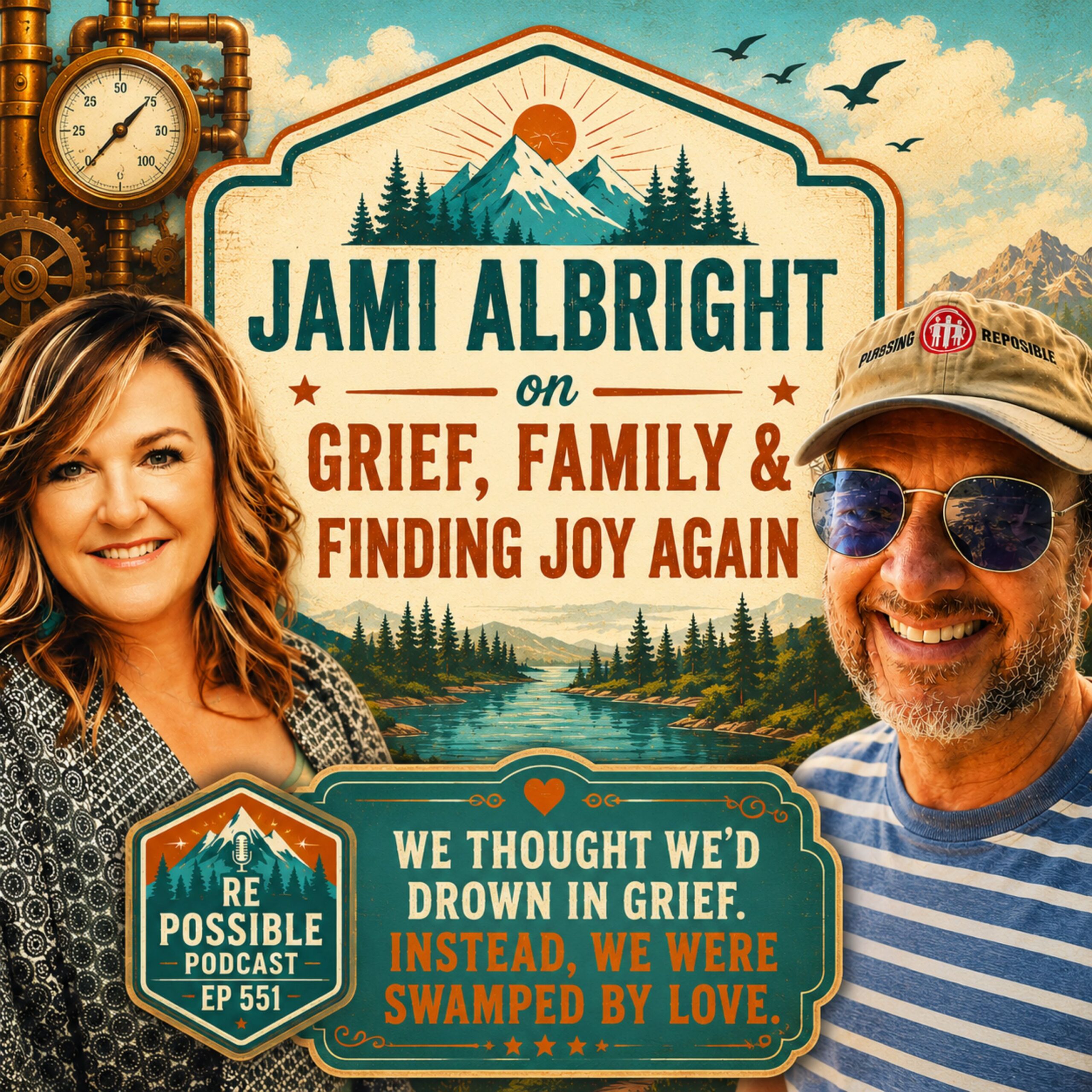
[00:00:11] Speaker B: I'm here with Jamie Albright, the author of the Summer that Changed Us.
And my.
[00:00:18] Speaker A: Yep.
[00:00:19] Speaker B: First. My first comment was like, I felt like sister number six.
[00:00:24] Speaker A: I love that.
[00:00:25] Speaker B: And I, and I, I'm happy I got to know June and I miss her already.
And I feel like there's some part of it that I brought with me and that's what. A gift that you offered everyone to share, to share June with, with everyone.
So welcome, Jamie. Nice to see you.
[00:00:42] Speaker A: Thank you. Thank you. It's great to be here.
[00:00:47] Speaker B: I.
So can you. For those of you. I just, I just read the book, I just finished it a few days ago and as I was just telling you, I've been struggling as a reader lately. I'm just, I don't know, I lose interest, I lose the plot. I don't know, whatever. And then. But yours, I couldn't put it down. And then. And I was just hanging out with your family. I'm just hanging out with the five sisters. Right. Nordstrom, sister number six. And I didn't, I didn't want the story to end. I didn't want June to leave us.
And I haven't had that in a long time with a book. And so.
[00:01:22] Speaker A: Wow.
[00:01:23] Speaker B: Thank you.
Kudos for you for, for keeping my attention.
[00:01:28] Speaker A: But that's saying something in this day and age.
[00:01:31] Speaker B: It is, isn't it?
And I, I highlight it and I love doing, I love highlighting in my, in my Kindle and it's, it's so fun because then you can see later your, your highlights and stuff. And I have some, some quotes and stuff that I really liked. But so for those of you who don't know you and don't know your book, can you just give a, give us a little bit of background on your book and the story of the book. A little bit.
[00:01:57] Speaker A: Sure.
[00:01:58] Speaker B: Where it came from.
[00:02:00] Speaker A: Right. So I have been writing for nine years and publishing for nine years and mostly wrote rom coms. But four years ago, my sister, I'm the oldest of five sisters, I prefer number one. But you know, you know, they, they don't. They refuse to call me that. So I'm the oldest of five girls and my fourth sister, Joanie, she had. Had stage four lung cancer, non smokers lung cancer for 10 years. And four years ago, actually this month, she took a turn, a pretty bad turn.
[00:02:44] Speaker B: And
[00:02:48] Speaker A: we found out in a few weeks after that bad turn that she had three. Three, I mean, six to 12 weeks to live.
And she passed away in October of 2020. 2020 22.
And it, you know, just paralyzed the creative part of my brain. I mean, just absolutely paralyzed it. I was there the whole time. I live and a half hours away from my family.
They live in this small town that we all grew up in.
And.
But I was there. And because of what I do, you know, I. I don't. I have a job as a writer, but I have free time. And my youngest sister, who's a teacher, and I were her primary caregivers. And so we were.
We were there every day giving her her medicine, doing all the stuff. And, you know, you just don't go through something like that and come out unscathed. You.
And so I knew afterwards I'm not going to be able to write for a while. Like, I could just feel it. I could. I could just.
I don't know, I could just feel that part of me atrophying. And so I.
I really didn't worry about it until about a year passed and I still wasn't writing. And then it another year and another year, and our mutual friend Janet Margot suggested I write this book. And I was like, no, thanks, but no, I write really slowly. So I knew I would have to sit in this for a long time. But anyway, so I ended up writing it because I couldn't let it go. And one of the problems was I couldn't figure out how to tell the story. I didn't want to do a memoir because I don't read memoirs. I don't write memoirs. And I didn't. I have a hard enough time writing. I didn't want to have to learn something new. And so I also didn't know whose point of view do I tell it from? All the sisters point of view. That seemed like a lot.
Did I tell it from June's point of view? That felt inauthentic because I didn't know how the dying sister felt.
And so it just hit me one day how I could tell the story. So I began writing last April and I wrote the first draft was pretty much what happened to us. Just.
Yeah, I mean, there was a little bit of fiction, but it was mostly the. What happened.
And I could have stopped after that. You know, I could have just thought, okay, I've written it down, I've. I've gotten it, I've purged it, I can go on. But I felt like there was something there. I just felt like there was a story there. That wanted to be told.
So I went back to it. I took a break from it for about a month and then went back to it. And you know, taking a.
Basically a true story and making it fictional was very difficult because I had to get rid of a lot of things that were very important to us but didn't serve the story. Okay. And, but in writing this story, it was very, it was healing. A lot of people have said that must have been so healing. And it was, but it was in a way that I didn't even expect. Like there was some anger stuff that I had that I didn't realize that I was still hanging on to and I was able to kind of purchase. There was, I mean, to protect Eminem anonymity and privacy and.
[00:06:24] Speaker B: Yeah, yeah.
[00:06:24] Speaker A: There was just some people and some things that I ended up writing in the book, like my sister would have wanted them portrayed as opposed to maybe how they.
[00:06:38] Speaker B: Yeah, yeah.
[00:06:40] Speaker A: And they, they didn't act badly. It's just they didn't act the way I thought they should have.
[00:06:46] Speaker B: Yeah.
[00:06:47] Speaker A: And I didn't realize I was hanging on to that. And so I was able to let go of that. And that has been really great. So, so. But that's how the story came to be. I, I just.
And then once I had the story, I just couldn't let go of it. I just, I could not let it go.
[00:07:04] Speaker B: So, you know, you know what's so interesting? You've said let it go four times now in the past few minutes, right? And because you said I, I, you, you couldn't let. Meaning you wanted to write the book or you thought you could, but you know, and then in fact, writing it helped you let it go.
Whereas I was saying earlier, I was talking about creating and writing. Writing is creating, right. So we have inputs and we have stories and we have stuff that comes in and we have to. In my humble opinion, I think we have to let it out. And I think artists, creators like us, we do that, right? Through our books or even through non published stuff or I have to let it out.
I record videos, I record audio, I record a lot of audio that's not for public consumption.
It's almost like the exhaust on a car. The gasoline comes out, it goes to the engine, it needs to exit.
And so I find that. And you say let it go. It's so funny because we were talking about let it go, but in such different ways, right? Because you're like, yeah, I've got to let it go.
[00:08:15] Speaker A: Yeah, you're holding onto it and I think that there was a part of me that thought if I wrote this book, that somehow, like, I was afraid to write it in some ways, because I didn't want to let go of Joni, you know, my sister Joanie, who died. And I felt like that maybe if I. If I purged all this, then that would be me releasing her in a way, and.
And I was able to. But in. But it's been in a really beautiful way that. That, you know, I saw your review on Amazon, and you said you miss you, Miss June already. And, oh, my gosh, that just touched me in such a way, because I want people to miss June. I want people to. To feel like they knew her and. And then missed her. I mean, June in the book and Joni in real life are very much the same people.
I. Everything else is a lot of fiction, but I really did not.
I really tried to make her authentic. The story in the book where. I mean, most of the stories are true.
The one where she won the Miss Honky Tonk contest with a bloody towel tied around her head, that story is true.
[00:09:31] Speaker B: Yeah.
[00:09:33] Speaker A: And with no embellishment.
[00:09:34] Speaker B: I mean, that is, like, it.
[00:09:36] Speaker A: That happened.
But it.
Because I wanted people to see that.
I wanted to portray the. The realness of.
Of a person, you know, the good, the bad. Because my sister would have told you herself. She was the last. I mean, she was the last person to be called perfect in the world. She was not. She was perfect to us, but she was not perfect. And you either loved her or. Or you really did not like her at all. There was very little in between. And most people loved her because she just.
She kind of embodied what everybody wanted to be. She. She had very few inhibitions. You know, she just was that person that would do and say the things that you.
We were all afraid to do and say. Yeah.
[00:10:28] Speaker B: Yeah. She would say, once in a while, there'd be a couple sisters or people talking near her, and one time she's like, I can hear you. Hello.
I can hear you talking about me.
Come on. Come on, people.
[00:10:46] Speaker A: I know she would do. She would do that. And, you know, I mean, in the book, I talk about how we, you know, June is in the living room of the family home as she's on hospice. Well, that's what happened at our house. I mean, you know what? We just. We're Southern people. We. We set our crazy and sick people up right out in the middle of everybody so we can all see her. But she wanted to be in the. She wanted to be at My parents house. She wanted to be in the living room. She didn't want to be in a bedroom. She wanted to be around everybody. And I mean again, if she wanted to be on the roof, we would have tried to make that happen, you know.
[00:11:24] Speaker B: Yeah.
[00:11:25] Speaker A: We just in.
So I wanted to share her with people and I wanted people to, to you know, maybe take away some of her courage and bravery in the face of this terrible thing. You know, she was only. She turned 49 the four days before she died.
So she was young, she had two small children. Well, one small child, one older.
You know, she is just horribly unfair and yet she never asks why she never, she never had. I mean she was sad, she was upset, she never, like there was no that we ever saw, there was never a pity party. And if we started going down that road, she would stop us.
[00:12:19] Speaker B: Yeah.
[00:12:19] Speaker A: And I don't know if that's because she couldn't.
You know, it would be an easy slippery slope for her or, or she just couldn't, she wouldn't, she just wouldn't entertain it.
[00:12:31] Speaker B: Yeah.
[00:12:31] Speaker A: And you know, she really believed.
She, she's a strong faith and she, you know, we would be sitting in the, in the room. I didn't put this in a book, but we'd be sitting in the room watching TV or whatever and just out of nowhere she'd go, I'm going home.
You know, she'd just be, she just be in her head thinking about going to heaven. And you know, that is, that was just her. I mean she was just, she was amazing and I wanted people to see how amazing she was. And hopefully, you know, we all face the hardships in our lives the way she did. I mean she really was a mind over matter person. Like we, if you can't change it, you can change how you think about it.
[00:13:17] Speaker B: Yeah, I remember saying something like that, you know, it's not the what happens to you, but how you react to what happens to you.
[00:13:23] Speaker A: Yeah, yeah.
[00:13:23] Speaker B: And that's why, because somebody was asking her in the book, somebody was asking her like, you know, aren't you sad or frustrated or whatever? Of course I am.
But this, it's, it's more how I react to what I cannot control and can control how I react to it.
[00:13:39] Speaker A: Yeah, yeah, yeah.
[00:13:41] Speaker B: It's interesting. It's such a similar story with my mom now six years ago and also the hospice and the bed and this is middle of Corona. It was terrible.
And like one of her last meals, my sister and I are sitting on her bed together and what do you want to eat. And she wanted in n out burger.
And so we got in and out burger. She barely could have a bite of it, but it was just sitting there with her daughter and her son on the bed and just having a little in and out burger. And it was just the, it was just the best.
[00:14:13] Speaker A: And those little moments that are so precious that you don't, you think at the time, you really don't even think about them. And then after the fact, it's those moments that really stay with you when somebody has passed. But you know, I did not also, I also did not want this story to be grief porn. Yes. That was my very like, I, it was not.
I was real. That was really so important to me. But I write romantic comedies normally, so. And they're pretty wacky and a little slapsticky sometimes, not always, but I mean small town rom coms that are just goofy and, and so I would have to go in and kind of pull back in the scene in the book with a food fight in the, in the restaurant.
[00:15:07] Speaker B: Yeah.
[00:15:07] Speaker A: Of the sisters that originally was very, I mean the food fight was really between the sisters. It was like intentional and it was, it was very comedic. And I had, I rewrote that scene probably five times to try to make it as realistic as possible, but still have some light heartedness because the book is so heavy.
But I want, anytime I write comedy, I want, I want it to be rooted in some realism.
That's what makes comedy funny, you know, and that's. And so that, that scene was super. I mean, like probably even a week before I sent it to the editor, I rewrote that scene again because I wanted it to be. I wanted to peel away all the things that made it.
What's the word? Not unrealistic. Because it's unrealistic. You're not going to. Grown adults are not going to throw food in a restaurant. But, but I wanted, I just wanted you to sit in that scene and think, wow, you know, I could really see this happening. I could really see this happening. And as the story goes on, you really can see. Oh wow, they could do that, these sisters. Yeah. A little unhinged and they could do that. So. Yeah.
[00:16:35] Speaker B: Yeah, I love unhinged. I love slapstick and rom com. That's, that's what I think is so exciting about what you did and the way that you did it and not the grief porn and not the. Yeah, it's just utter tear jerking sadness.
[00:16:47] Speaker A: Right. And I mean it is sad. There's no sadness.
[00:16:50] Speaker B: Yes, but, but that's like, a given, right?
[00:16:53] Speaker A: You know that going in. Like. Yeah. You know that going in. Yeah.
[00:16:57] Speaker B: And that's what I thought was interesting, because I was even thinking about that, like, in. In my review, because as I was thinking, well, I know what's going to happen. It's not like. It's not like there's a surprise ending, like, nope.
[00:17:09] Speaker A: Right.
[00:17:09] Speaker B: She's gonna die.
[00:17:10] Speaker A: Yeah.
[00:17:11] Speaker B: And that. It's like, okay, well, okay, then why am I reading?
[00:17:15] Speaker A: Right.
[00:17:16] Speaker B: Well, I'm reading because I want to live this experience with the sisters, and I want to get to know June a little better. And then I'd like to take a little. A little piece of June with me. Right.
Because you get to know her a little bit. And that's what the gift that you have given is that you've given everybody a little. A little gift of June. Joanie.
And that is because I was thinking that I often think about people who are watching this or listening to this. I talk a lot about creating, and people say, oh, I want to write a book. I want to write a book.
[00:17:45] Speaker A: Yeah.
[00:17:45] Speaker B: And everybody wants to write a book, but don't do it.
Run.
[00:17:52] Speaker A: It's so hard.
But.
[00:17:57] Speaker B: But you. You could. You could have written this just for you or for a sister or all your sisters or your family.
[00:18:03] Speaker A: Yeah.
[00:18:04] Speaker B: And that would be a totally different book. And it's. I don't know, it's more accurate or it's more. Whatever. It's more real. But I don't know. But then your audience is your family.
And that would be. That would have been nice. I don't know. It's nice, I guess. But now you're the choice to make this public and to share this with the world. I think. What. I think I'm all about humor, and I got it from my mom and dad, too. And also to their dying day, you know, making jokes right on the deathbed.
And that's so important to me. It's so important. And you now have given. You've shown in your story how that's. It's possible. Look, look, this would happen. Come hang out with us for six months. Come hang out with us for a while here in the small town, in the inner living room, at the restaurant and at the hospitals, and I'll show you. Just watch. Just watch how it. How this is a way it can happen, right? With sisters. I thought that was just so giving of you to give that to everyone.
[00:19:03] Speaker A: Yeah.
Yeah. You know, I mean, it's a real fine line sometimes, because, you know, I grew up in this small town with this huge family. I mean like this book has so many characters. There are five sisters, two husbands, two parents, an ex husband. I mean, we're all in the room together with these people and they're all talking at one time. And I was worried about that. And I knew, I considered shopping it to a trad publisher, but I knew the first thing they would say was, you gotta. There can't be five sisters. You have to make it two sisters or three sisters because too many characters. I mean, I just knew that. And so that was a non negotiable, like there were going to be five sisters. And. But so in the book there are all these characters in the. My real life with all my sisters, husband's kids, parents, there are 35 of us.
That is just my immediate. That is my family. That is not aunts, uncles, that's. That is my sisters and our kids and our parents and husbands. So you know, it, it could have been worse, but it wasn't. But you. So all of these people. Because everyone but my family lives, still lives in this small town and all of these people daily were just, I mean, they were just in and out of my mom's house. So, you know, there was always something crazy happening. I mean, life did not stop just because she was dying. Yeah, it just continued on. And I, I wanted to show that. But I also wanted to show, you know, if you've ever walked through this, walk this path, you ever, like every day cannot be this feeling of absolute doom or you will die. Like you yourself will die. Like it's. In some ways it's kind of boring. You know, sitting and watching someone die is boring.
And there was a lot of boredom.
And when there's boredom, people start talking and doing it. Well, we do anyway, doing crazy things and saying crazy things and making stuff up and, you know, all of that. But all that to say that my family is super important to me. We are not perfect. I, I kind of grew up thinking I had this perfect family. And then I went to college, went, oh, wait a minute, I'm seeing a few cracks here. And then I went to therapy and went, whoa, I got some real cracks.
[00:21:41] Speaker B: But that's really funny.
[00:21:44] Speaker A: And then, and then my dad, My dad and I have always like the story, the, the story between June, I mean Hope, the main character and the father, that is not autobiographical. But, but my father and I have never, we have always struggled. And yeah, watching him love my sister through this time and be present when he is the most emotionally handicapped person I known in my life. He stayed in. That healed something in me. Like, it healed something in our relationship. Even though he.
He wasn't staying there for me, he was there for my sister, but it was really for all of us. And, you know, he wasn't. Like in the book. He's. He's got a lot of. You know, he says a lot of things, and he does a lot of things that are really sweet and touching. He did those things, but they were very private, just between the two of them. There's a scene in the book where I Hope is walking down the hall, and she looks in, and she sees him standing over June's bed, and he raises his hand to touch her, and then he stops, you know, to, like, touch her leg, but he stops because June's asleep. That really happened. Like, I watched my dad do that, and that was heartbreaking because he just did not know how to.
He didn't know how to love her other than to just be present.
But I think that's kind of profound because really and truly, that's all anybody needs, is for somebody to be present with them in a really hard time.
And so, anyway, my family is not perfect. I would never tell someone, hey, make peace with your family. Because I know there are families that just.
They can't be put back together or there. There have been hurts that have been caused that can't be forgiven, but that was. That's not the case in my family. And because of that, I am so grateful that we had each other to walk through this time to get, you know, time with.
If.
If you can make peace. I would always encourage that, because you only get one family, and you only get one life.
[00:24:03] Speaker B: And I often write. Unless you're a cat.
And, you know, it's interesting.
[00:24:08] Speaker A: The thing you can't get back is time. You cannot. You cannot get it back. So.
[00:24:13] Speaker B: So it's. But I. One thing I really liked, and I thought, like, oh, this. That was good. The.
You know, she's literally on her deathbed, right? And.
And some. And she.
I actually thought this was kind of funny, and it was treated funny, too. But she would say things, and you had to.
She would have a demand. Like a demand or a request or whatever, a question.
[00:24:39] Speaker A: And.
[00:24:40] Speaker B: And the way she was saying it, she was kind of pulling the I'm on my deathbed card. So you have to do this thing, right? And I. Because you were talking about, like, splintered families. I remember because my mom, like, so my dad was dying, but my mom kind of pulled that card anyway. And said, like, her s. And her brother had some feud.
Stupid feud thing. And it was one of those, like, it was so long ago that neither of them could even remember what it was about, which is often the case.
[00:25:07] Speaker A: Exactly.
[00:25:07] Speaker B: Right. And it's over something ridiculous, I'm sure. And she kind of pulled that card and said, all right, you two had enough of your crap? You know, you guys just. I don't care if you just make up just for the moment or whatever, but come on, right? Get it together, shake hands or whatever you guys need to do.
Put on the big boy pants and the big girl pants and get over here.
[00:25:26] Speaker A: Yeah.
[00:25:26] Speaker B: And they did it.
They sucked it up, buttercup, and they did it.
[00:25:30] Speaker A: Yeah. Yeah.
[00:25:31] Speaker B: And it wasn't easy and it wasn't fun, and they didn't like it. Nobody liked it. But they also said, look, hello, we've got a bit of a time crunch going on over here, right? So, you know, you guys can be. You guys can hate each other in your next life.
[00:25:44] Speaker A: Exactly, exactly. And you can work stuff out after the fact, but right now, this. We've got more important things to deal with.
[00:25:51] Speaker B: Yeah.
[00:25:52] Speaker A: And.
And for us and our family, this is how we chose to do it. I mean, like, my sisters and I. I mean, we really can go toe to toe. Like, we can throw down.
We're just a little bit redneck. So, you know, we can throw down and have. In the past. We're old, we're tired. We're. We're. We just don't have it in us as much anymore. But.
But, I mean, it's not like we are all holding hands, skipping through the daisies.
[00:26:23] Speaker B: Right?
[00:26:23] Speaker A: Right.
[00:26:23] Speaker B: Right.
[00:26:23] Speaker A: We are.
Again, we've all done things that the others didn't agree with.
Joanie was not easy. A lot of the time before she. I mean, you know, just in life, she was mean sometimes. Like, she would just tell you she did not sugarcoat anything.
[00:26:41] Speaker B: Yeah.
[00:26:42] Speaker A: And.
But that just hardly mattered, you know? I mean, those things, you just don't. That's just.
That's just part of living with other people and doing life with other people. Yeah, you. You have. In. In my opinion. And again, I would never even presume to tell someone else how to handle their life with their family. But in my opinion, for my family, trying to work those things out and forgiving, even if some. I mean, my dad has hurt my feelings a lot.
And I remember thinking, well, I went to therapy when I was about 35 because I was kind of having this crisis. Like, this is a real issue. Like, this man is really not present in my life other than just physically present.
And in the, in therapy, I realized that what I require for love is this five course meal. Like that is. That is what I require to keep me going and it's what I deserve.
What my father had to offer was a Happy Meal. A McDonald's Happy Meal. Yeah, that was it.
[00:27:56] Speaker B: Yeah.
[00:27:56] Speaker A: I had the choice. I could choose to accept his Happy Meal or I could reject it. And I was well within my rights to reject it. I mean, honestly. And.
But I decided to accept it and get what I needed from the other people in my life. My husband, my children, my, you know, my friends and my, my mom, you know, and in doing that now what I get from my dad is more like a mighty kids meal. Yeah. I actually get more from him now because I stopped requiring so much for things from him that he just was not capable of doing.
And that was really profound, a profound realization for me.
Did it mean, you know, we hung out and have long conversations? No. And still we don't. But it's let him off the hook enough that I could see him as a person and not just as my dad.
And he had a lot of issues too, you know, I mean, and he grew up in kind of an abusive home, which I didn't really know about until I was older. And.
But yeah, so that's me, you know, we all have to come to that. That's how I came to this point of sticking with my family sort of thing. Yeah.
[00:29:18] Speaker B: But it's. I like the. I love your visual. I'm super visual. I see everything visually. So it's like the five sports meal. Then I got the Happy Meal over here and. But the, the idea and of, of you understanding or accepting that he's got a Happy Meal on offer.
And it's up to me whether or not I'm going to accept it or if I'm going to wait around for that five course meal. That, that ain't ever coming.
And so I'm going to just be frustrated while I'm waiting for the five course thing. And he's got, he's got the Happy Meal right there on the, on the silver platter or on the plastic tray.
Yeah, plastic beige. Betrayed.
[00:29:58] Speaker A: Exactly. Yeah. I mean, it's true. And it gave me the power. I could, I could accept it or I could reject it. That power was with me. And then once I made the decision to accept changes you. You know, once you realize you've, you've made that decision, that changes you. And so all of those things played into how I wrote this book, you know, and how I portrayed people in this book. My dad in particular, or the father in here in particular. The scene where June asked the dad to tell all the sisters that he loved her, that he loved them. That really happened. It wasn't as dramatic as the. As it was in the book, but, yeah, she made him tell us all. I mean, he.
He would tell me because that was the one thing that I sort of required from him.
Like, I. We had a discussion, said, listen, you don't have.
Like, we don't have to have these long talks where we share our feelings, but all I want is when I show up and when I leave, you tell me you love me. That's it.
[00:31:02] Speaker B: That.
[00:31:02] Speaker A: And you give me a hug. I mean, and he's.
[00:31:05] Speaker B: He.
[00:31:06] Speaker A: From that day forward, he did it.
But my other sisters, I don't know that he had ever really said it like that to them.
And.
But that's because I'm. I'm. That. I'm that person that just says, hey, you're not going to ignore me. You're. You're not going to ignore me. And my sisters are less like that, you know, so Joanie was.
[00:31:30] Speaker B: Yeah, that's really interesting. It's also a lot about communication, just with how open and transparent are you going to be and how honest you're going to be, and are you going to go through some pain to get through it and. Because maybe your dad is thinking, yeah, discomfort, yuck.
And maybe your dad is thinking, wow, Jamie, I didn't. I didn't. Real. Maybe he says it in his head, but I didn't realize you wanted that from me. I can offer you that, no problem. Glad you asked, right? It might be as simple as that.
[00:32:01] Speaker A: Right? Yeah. And I think. We think if we have to ask for it, then it's not. Yeah, it's not worth it or whatever. That's not true. Every time my dad hugs me and tells me he loves me, there's this little part of this little, you know, little cat in me that kind of curls over and, you know, purrs. It's just this weird thing that a child needs from their parent. And. Yeah, it doesn't really matter how you come about getting it, as long as you get it.
[00:32:27] Speaker B: Well, in fact, we could be all. Whatever, stoic and proud and never ask, because if I ask, then I'm. It's not as real. Okay. Yeah. You might be waiting a while.
[00:32:37] Speaker A: Yeah.
[00:32:38] Speaker B: They just might not know. They might not know. They really don't know.
[00:32:43] Speaker A: No, I don't know. Yeah, they don't know. So I wanted all of, like, I just wanted all of that in the book. And, yeah, I feel like because things were so easy with Joni and people, you know, her relationships were just so easy. It felt like. And you know, from the outside looking in, because she was just in your face. She was just. From the time she was born, she was in your face.
She screamed all the time when she was baby. She's 10 years younger than me, so I remember.
And yeah, so she, you know, she was just always in your face. And so relationships just were easy for her where for some of us, they're not. And I wanted. I just wanted people to see that. That all the different facets of a family and a relationship going through this. But interestingly, the.
The way the story started, like, when I first had the vision of writing this, it was this relationship between Hope and Ian, this wife and ex husband who. Who are kind of forced together through this tragic time.
And I. Very few people have even mentioned that part of the story and to. Except my daughter. My daughter said, now I want to know what happens with Hope and Ian. And I was like, well, we're not. We're not having that story.
They live happily ever after. Just assume that. But
[00:34:19] Speaker B: thanks for dying.
[00:34:19] Speaker A: Yeah, exactly. But I. I wanted to explore that relationship too. Like, this women. Woman going through midlife. Like, it's not just a sister that's dying. It's. It's like a woman going through midlife, having to deal with her parents and kind of having to really step in and take, like, emotionally take care of her parents when that's not been the case before.
Dealing with an ex husband, dealing with starting over, dealing with relationships that are tricky. You know, that's really kind of how the.
The catalyst for writing the book. You know, that's how I thought, oh, this is how I can tell this story. It morphed a little bit, but I really.
I love that part of the book. Like, I love watching Hope discover things about herself that she didn't know.
[00:35:16] Speaker B: Yeah.
[00:35:16] Speaker A: She was capable of. Or.
[00:35:18] Speaker B: Yeah.
[00:35:19] Speaker A: And. And new ways of thinking. And she's 50 years old. You know, you can change. You know, things can change, and we can change as we get older.
[00:35:29] Speaker B: You know, when she discovered things in Ian, too, that she didn't believe. And so when he actually, you know, he said he's going to camp out front.
And so. Yeah, yeah, yeah, we'll see how long that lasts. Right? And it lasted.
And so. Okay. Okay. You Know, you're. You're walking the talk. Well, yeah, trust him more and more. And that was. That was cool to see that, you know, of June. So with. With my. My mom, I remember a specific. Like, I think it was her last week. And I'm. And I. I wrote about this quite a bit when the last week my sister and I were driving to her house.
She was still okay. Ish. And a.
A friend of my parents calls and. And we have him on speaker, on in the car.
And so my mom is dying, and this is a longtime friend. They've known each other almost their entire lives, but he was the best friend of my dad.
And he's this, like, rough guy, and he's just like. And he even talks rough. He's like, rah, rah, rah, rah, rah, Right?
[00:36:29] Speaker A: Yeah.
[00:36:29] Speaker B: And he has this really deep voice, and he was annoyed that my mom was taking her dying so lightly, right?
And he says. And even he's like.
And he's like.
And then at some point he says, you know, everything's a silver lining, and he always finds the best in everything. And he says, you know, well, you know what it is for us, it sucks.
It sucks.
And so she said, I'm not really happy about all this. He's always so damn happy. And then he even says. And I quoted this. I wrote this about my mom. He says, yeah, yeah, Dee and her goddamn attitude. You know, it's just. It's really hard for us. We're trying to suffer over here, you know, and she's not making it easy. Always happy, go lucky. And goddamn silver lining.
My sister and I, we have, like, have it on mute because we're laughing so much.
And I. I'll never forget it because that was my mom. She did have this goddamn attitude.
And I even. I even published a short book about it.
But that's my question to you. So I.
I quote this often because I want to have that attitude. I want to have that goddamn attitude that is annoying to people because I'm a happy, go lucky, free for all leprechaun. You know, I usually am a pretty uppity fun kind of guy, right? And I'm. And I'm good with that. I'm okay with that.
[00:37:59] Speaker A: Yeah.
[00:37:59] Speaker B: And if you want to be down in the dumps and bummer, okay, I can do that. But, yeah, I want. I want you to tell me that I have a goddamn attitude. So, yeah, I'm thinking like, I took. I, like, borrowed that from my mom, and I feel like I have it Right. So, like from June and I think through Joanie, June, Joni, the real person. The. Do you have things that you feel like you've, like, adopted or borrowed or going to take with you in your life that. Oh, yeah, you admired from June that you. That June's gone. And so who's going to take these things that were such cool qualities?
Do you have stuff you can think of?
[00:38:42] Speaker A: Yeah. Oh, the whole. Yeah, you can't. You can't change the circumstances, but you can change the way you think about the circumstances. Yeah, that. Definitely. Definitely. And interestingly enough, I've had to use it with this book because this book, you know, the release of this book has been, you know, it's. You. There's no way to release a book like this and not put some pressure on it. Like, there's just no way.
It. It's too important.
And I want everyone to read it now. It's not for everyone. You know, clearly it's not for everyone.
[00:39:14] Speaker B: Yeah. But.
[00:39:20] Speaker A: It's just not done as well as I'd hoped. You know, I try to manifest all the things and I.
And it's just not perform. But I have had to constantly go, you know what? I can't change how this book is doing. All I can change is how I react to how this book is doing. And I. If I stay positive to. To be upset, to be all down in the dumps, to be constantly checking my rank and all of this stuff is disrespectful to the process and what it took to write the book.
It is disrespectful to the story of my sister.
And so because of that, I am just choosing to look at it a different way for the people that it affects, for the people that read it, who love it, which, you know, I mean, I'm fine with bad reviews. I don't. I've never had a problem with bad reviews. I've not received one bad review on this book yet.
That doesn't mean it. It's not going to get into the hands of someone who just could. Cannot stand it.
[00:40:29] Speaker B: Yeah, yeah.
[00:40:29] Speaker A: Shouldn't have read it in the first place and reads it anyway.
But I feel like that it is.
It's just disrespectful for me to be worried about how a book, this story performs when the story itself is so very important. And so, yeah, I'm really trying to hang on to that. And so that, of course, that stays with me. There's things like I. I was telling you before we got on, I teach swimming lessons Every year. And I have done this since I was 20 years old and a long time. I won't say how long, but a long time.
And so. But my. But Joanie and all my sisters and my mom, we've all taught swimming lessons that we started teaching.
[00:41:20] Speaker B: Okay, cool.
[00:41:21] Speaker A: When I went to college, when I went to college, Joanie and my youngest sister Randy were seven and four or seven and three something. Seven and four. And my parents got a dagum swimming pool when I left. And I'm like, this is really unfair. And it was an above ground swimming pool. And to pay for the swimming pool, my mom decided she was going to teach swimming lessons. Now, I'd never known the woman to teach swim a lesson in her life, but she went and took some classes and then came back and. And so she started teaching. Well, because I'm in college, I get in the pool. I'm teaching, too. You know, we're all teaching. Our. Our kids have taught. You know, it's this whole kind of family dynasty in this small town.
And so.
But Joni used to say, it is easy money. All you got to do is get in the pool. And because my sister. My youngest sister Randy, who. Joanie and Randy were like this. And in the book, June and Babe are like this. I mean, that. That relationship was true.
And.
But Randy hates swimming lessons. She always hated teaching swimming lessons. But she would do it because Jody would say, get in the pool. It's easy money. And so when I teach swimming lessons, I do this, like, on the days that I just do not want to get in, I'm like, it's easy money. Get the pool. Yeah, I can just hear her voice saying those things to me. So, yeah, I mean, she just was. I put your head down and do your. Do your thing no matter the circumstances. And yeah, so I take. I'd really try to take that with me because I'm not always like that.
[00:43:04] Speaker B: No, no, of course not.
[00:43:05] Speaker A: I'm a wallow. I like to wallow.
[00:43:07] Speaker B: Yeah, yeah, yeah. I mean, I say this about my. My mom and her and her attitude. Of course, that's just the highlight. The highlight reel.
But you hope that it's like, at the core.
[00:43:17] Speaker A: Yeah.
[00:43:18] Speaker B: Just like I felt with June.
[00:43:22] Speaker A: Yeah.
[00:43:22] Speaker B: So, no, it's interesting because we opened up talking about letting go, and I think there's this interesting sort of balance with. Because you said one reason you didn't want to write the book is then you're closing that door, and now it's really over. I mean, it's really over. But Then it's really over.
[00:43:45] Speaker A: Exactly. Yeah. No, yeah, yeah.
[00:43:47] Speaker B: And I think it's.
So I talk and I write a lot about love and I think I even. I was at a retreat recently and they asked me at the end of the retreat and said, do you have any comments? And I've said this and I'm just going to say it, but I have this thing, it's just. I had it. I went to this 10 day meditation retreat once and afterwards all I could say is there is so much love.
There is so much love. And then there is so much love to give, there's so much love to receive. There is so much love. And I just see that from your family, from your sisters, from Joni, from June.
And then, because I think what you're providing here is you are, you are showcasing, you are offering all this love, you know, from June, from your sisters, that there is loss. We're not, we're not denying loss. Not at all. In fact, there's even more love that can come from the loss.
[00:44:43] Speaker A: Yeah.
[00:44:44] Speaker B: And I often, I also talk about how love is sort of the easy example is like a digital photo, right? So you have a digital photo and if I make a copy of the digital photo, now we have two digital photos. We have two things, but it didn't, it didn't take away from that first one. That first one is still a digital photo. Now we just have a copy of it. And it didn't cost anything to make that. And now we have double the two photos. And so I feel the same about love.
Like you had it with your sister and your sister is offering up love. It doesn't mean somebody got less.
It's not like a zero sum game where you take a piece of pie and now there's one less piece of pie. No, it's just magically always growing and there's just more. And the more we give the love, the more we can. Well, receiving love can be harder sometimes than giving.
And so I think you, through your book and thanks to June, are offering up love.
You are, you are giving love on a, whether it's on a silver five course platter or a plastic tray, you are offering up love to the readers.
And they. And then Donald and then to quote June, again, it's up to you how you're going to deal with it or, or respond to it. So there's, there's this offering of love from, from Hope and from Jamie and from June and from Joanie and all the sisters. You're offering up this book of love. Because that's what it really is.
And you have a choice.
[00:46:15] Speaker A: Yeah.
[00:46:15] Speaker B: And then you can receive it and make more or not.
[00:46:20] Speaker A: Yeah.
[00:46:21] Speaker B: Yeah.
[00:46:23] Speaker A: So I hope that's what people take away from it. That is.
That really is my hope that people take away from. Because I will tell you, there were days that I thought we would drown in grief, but. Yeah. Or I thought we would drown. You know, like, looking.
Like when you have someone that's chronically or sick for a long time and you think about that future time.
I think I say in the book that when I let my mind wander to the place where the cancer came for June, I always wondered how we were hand. How we would handle it. And what I found.
Excuse me, was it was like we were made for this. Like, before we were even born, we were. We were made to walk her to the end of her life.
And that is how I feel. And so instead of drowning in grief, which we did, it was almost like we were being swamped by love in the middle of being drowned by grief.
And it just really.
Yeah. I mean, it was. It was. It was a tangible thing. You would walk into our home or my mom's home, and it was just this tangible thing in the middle of all of this terrible, terrible grief. But.
[00:47:44] Speaker B: Yeah,
[00:47:46] Speaker A: and I. I. That's my mom. I mean, I really give a lot of credit. My mom is just. She really is love.
Just the embodiment of love. And always has been, always has.
[00:47:58] Speaker B: My mom was, too. Yeah.
[00:47:59] Speaker A: Yeah.
[00:48:00] Speaker B: That's what I wanted. That's what I'm taking with me.
[00:48:02] Speaker A: Yeah. Absolutely. You just want to be that you want to.
And there were people that would come and, like, come and stay.
They would. They would. We would have to say, okay, Junior, Joni needs to rest now. Like, can you leave? But they would stay because they. And they would tell us later. I. I don't know why I stayed so long. It's just. I didn't want to leave, you know? And I think it's because they.
They felt that. You know, they just felt that love that we had for each other. Yeah.
[00:48:34] Speaker B: Yeah.
[00:48:36] Speaker A: So it was.
[00:48:37] Speaker B: Wow.
The summer that changed us.
[00:48:41] Speaker A: Yeah. Yeah.
[00:48:42] Speaker B: I think it's a. It is. It's a love story. I think it's a. It is about grief, that there's grief in there, but you can take what you want. But it's a. It's a love story.
[00:48:51] Speaker A: It is. And.
[00:48:52] Speaker B: And with humor. There was. There's one quote I kept. I was just looking for it, and I just. I love it because it's so.
Okay, here we go. Here we go. Okay. It has nothing to do with anything. But you say, so the Rusty Bucket, I guess, is a restaurant or a bar or something, right?
[00:49:06] Speaker A: It's like a bar. Yeah.
[00:49:07] Speaker B: Okay, so you say. You say trivia at the Rusty Bucket isn't in danger of becoming a recruiting ground for Mensa anytime soon.
That was so good.
You could have said it in so many other simpler ways, but I thought, wow, what a roundabout description that I thought was just so hilarious. And there's so. I have so many quotes here. I've quoted you, like, 15 times from the book. Just scrolling through them over here. There's such good stuff.
[00:49:36] Speaker A: Yeah.
[00:49:36] Speaker B: It's really.
[00:49:37] Speaker A: If you. One thing about me, we're going to take the roundabout way. We're not going there directly. Yeah.
[00:49:43] Speaker B: Yeah. And I love it. I really appreciate it.
[00:49:45] Speaker A: Thank you. Thank you.
[00:49:46] Speaker B: Okay, if.
What. If. If. Okay, I'm just going to ask this. It just came to me. But if, like, if. If June were here, Joanie were here, what would. What would. What would Joni say to close us off here? You know, to wrap up our little chat here?
[00:50:05] Speaker A: Oh, yeah, that.
First of all, she'd say, why are y' all talking about me so much?
But she was. She would. She would say, yeah, like, you cannot control the circumstances. I mean, you can. You cannot control what happens to you. All we can do is control how we react to the circumstances. Circumstances that we find ourselves in. Yeah, yeah. And we can. We can do. It's mind over matter. You know, for her, it was faith over fear. You know, she just believed that. She believed she was going to a better place and that she was going to be taken care of. And we.
Because, honestly, once she went on hospice, that was the most peaceful I had seen her in. In several months.
Once she made that decision, she was. Honestly. There was a happiness to her that I had not seen in a few months because it was constantly fighting, you know?
[00:51:12] Speaker B: Yeah, yeah, yeah. I remember that in the book, because everybody else, of course, it's human nature. We want to save and protect, and we can. We can do more and.
[00:51:21] Speaker A: Yeah, yeah. But, you know, she had had this.
She had had this cancer for 10 years. Like, when it was diagnosed, it was stage four cancer. The tumor in her lung was as big as a grapefruit. We could feel it on the back.
On her back, like, through her skin.
But.
And we would have to remind her over those 10 years, you do remember you have cancer. Like, she'd want to do something or she'd be Mad because she couldn't do something. And I was like, you do know you have cancer, right? And.
But the day she went on hospice, she was laying there, and she said, you know, I never really thought this would take me out.
I'm like, really? You never thought stage four cancer would take you out? No, she really didn't. She just convinced herself that. And that's how she lived with it for 10 years. And people that met her.
People that met her that didn't know us or didn't know her well, didn't even know she had cancer.
[00:52:21] Speaker B: Right.
[00:52:22] Speaker A: Like, she never acted. She missed maybe four to five days of work in 10 years because of, you know, treatment or cancer or something.
She just went on like this was. This was just part of her life, and she was just gonna live her life.
So that is what I would encourage people to do.
[00:52:42] Speaker B: Yeah. Right.
[00:52:44] Speaker A: Whatever it is you're facing, just look it in the eye and dare it to do its worst.
[00:52:49] Speaker B: Yeah.
[00:52:49] Speaker A: Because you're gonna do. You're gonna do your best. Yeah.
[00:52:53] Speaker B: Yeah.
Thanks, Jamie. And thank you for bringing this. This story in this book into the world. And I think it's a love story, and people can.
Yeah, really well, they can take some love, and then they. They have more to offer themselves as well. So it's just a.
It's an offering of love, and I challenge you, dear viewer, dear reader, to accept it.
[00:53:23] Speaker A: Yes, I do, too. I think that would be a great way to end, because that is the best thing.
[00:53:30] Speaker B: All right. Thanks, Amy.
[00:53:32] Speaker A: Thank you.
[00:53:33] Speaker B: Bye.
[00:53:34] Speaker A: Bye.