Episode Transcript
[00:00:00] Speaker A: But we've really shifted in the last 12 months to not focus on book sales.
Book sales is a metric, and it's not an unimportant metric. So it's not to say book sales don't matter. They're an indicator.
Book sales as a goal.
It's a tough goal. So what we do is we think about, okay, this book is the foundation of your intellectual property. Create a phenomenal book that has your message, you know, your frameworks, you've got your stories.
[00:00:26] Speaker B: That.
[00:00:26] Speaker A: That's your intellectual property. Now, your book may never be read, may not be. Somebody might consume a chapter of it on Spotify. Right. They might just listen to a chapter, and that may be the only piece they hear. It may become an interactive workbook. It may become a course, it may become a keynote. But this is your intellectual property that is now going to lead to your positioning as an authority. And that authority leads to, you know, more money, impact, and other things.
So the goal for me isn't book sales.
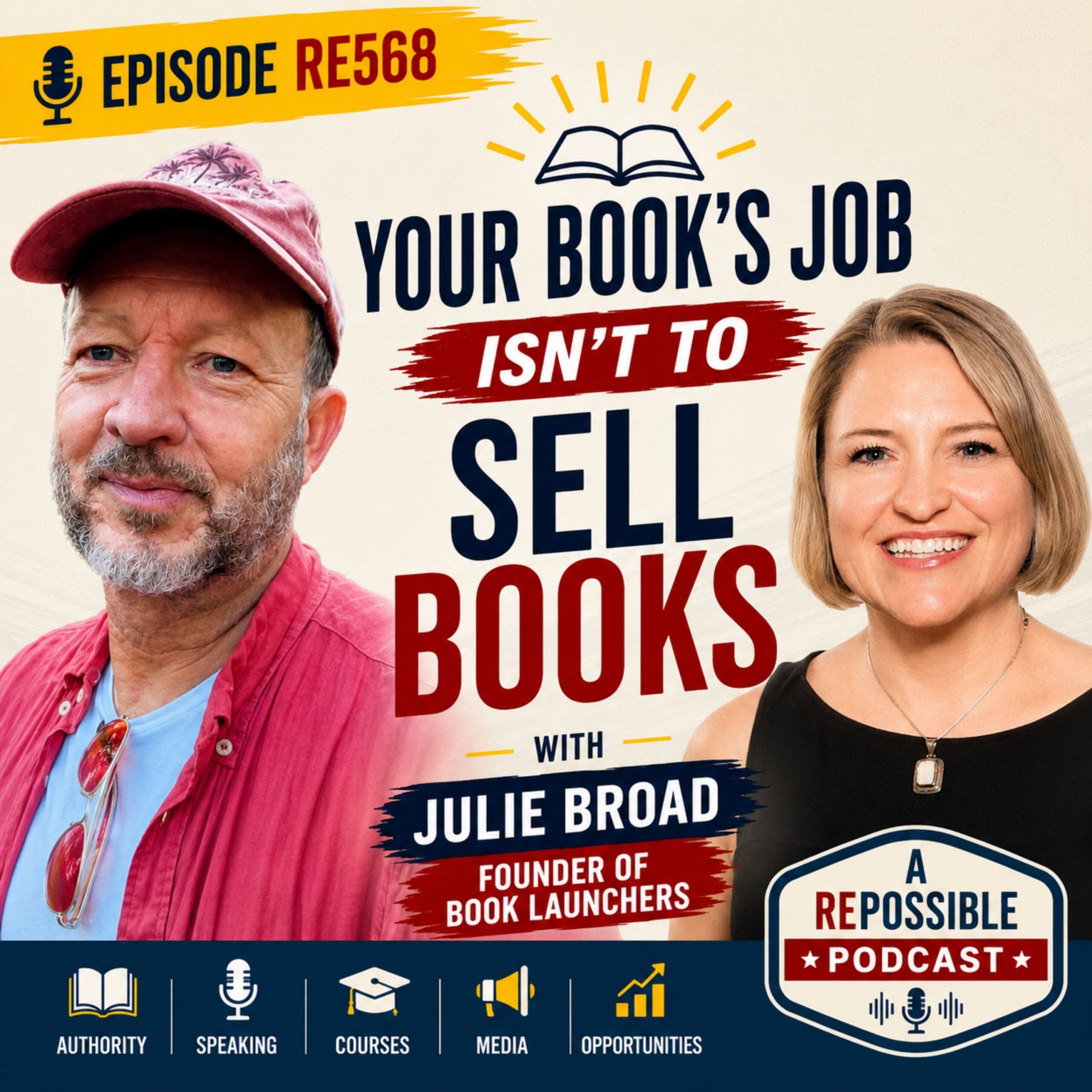
[00:00:59] Speaker B: Hi, everyone. I'm here with Julie Broad, founder of Book Launchers, and I've been following you for a long time, and you are like my go to for what's the latest in nonfiction book publishing, but especially marketing, which I want to get into.
And as I was talking about, people come to me for nonfiction book help, and I want them to go to you.
How can I say that more bluntly?
Yeah, I really respect what you do, and I've followed you for years, and I'd just like to have a little chat about what you offer to potential nonfiction book authors and what kind of services you have and what does it cost and what can they expect and timelines and the whole hit and caboodle. Because I get requests all over the place from like, I have a book idea to, Sorry, I shouldn't say that in such a wine idea, whiny voice. I have a book idea, but. And then all the way to, like, no, I have a business, and I'm legit, and I have a platform, and I want to write an awesome nonfiction book. And that for those people, it's even more like, here's Julie.
[00:02:10] Speaker A: That's awesome. First, I'll tell them that, you know, to forgive any.
To forgive you for anything that you're saying because you've been renovating your house all day.
[00:02:23] Speaker B: Yes, I literally have. Yes, I've been hard at work patching.
Patching rotten window sills and stuff like that.
So back to books. Back to nonfiction books. That's all you do, right? You only do Nonfiction, right, Correct.
[00:02:39] Speaker A: That's it. We don't do cookbooks either. So when we're talking nonfiction, we're talking, you know, self help business, memoir, those how to kind of books.
[00:02:49] Speaker B: Okay.
[00:02:49] Speaker A: We're not talking about cookbooks or coffee table books.
You know, we really like memoirs story. Yeah, we really like something with a story or, or you know, something that's really going to, you know, position or the author is going to use to position themselves as the authority and the expert. Because, you know, frankly part of that is because books are hard to sell like it has. It has never been easier to publish books. And as a result, there has never been more books hitting the market than there is right now, which means it's harder to make money from selling books. So, you know, a bigger picture and a bigger plan is pretty important.
[00:03:26] Speaker B: Yeah. And especially also with AI and especially nonfiction, and so much AI nonfiction, whether it's junk or not, it's just so much. It's just the quantity is just amazing. So on that note, like how then, how do you position yourself?
Hire, you know, you're real human and you have human team and there's a human potential author coming to you. How do you position yourself to, you know, outdo the A.I. you know, why is, why is their book going to be better than the AI book? Or how do you see that? Because I know you're also, you are not anti AI by a long shot. I know you have, you're doing quite a bit with AI which is super cool.
[00:04:09] Speaker A: Yeah.
[00:04:09] Speaker B: So how do you sort of see that for the potential client?
[00:04:13] Speaker A: Yeah. So I think what's happened, this is, this is how I see it is AI has forced us to raise the bar in what we produce. And so a lot of people kind of see it as AI has taken us all down. But I don't see it that way because I see it as, okay, this is the standard of like as good as it gets for an AI book. Now you need to be better than that. And so that's why I say it's raised the bar. And what that means is that how to is not good enough. Right. Your seven steps on how to get rich in five years or your seven steps on how to become a better leader, that's not good enough because I can get that from AI. And so what I need is your unique, interesting perspective. And so the example that I give sometimes, I'm giving today, we'll say I grew up in a 20 room motel on the side of a highway in rural Alberta, Canada.
And so my Life was very interesting, very unique. And one of the things that I always tell people is, you know, when they say, like, where did you get this entrepreneurial spirit?
Well, you know, I grew up watching my parents every single day. We lived at their work. Right. Our home and work was interchangeable. And at 2am when, if the motel was not full 2am the doorbell would ring, my dad would get out of bed, put on his blue velvet house coat, walk down the stairs and. And rent that person a room. And so this. This was my life. And so I learned a lot of things. Good. You know, things I was like, I love this about my parents life and things I didn't want to live. Like, I did not want to be attached to work 24 7, which they were.
And so from that, I've gained a really unique perspective that I can't write. Right. That lens that I bring to the world, that lens. And also, I mean, I'm sure some of my work ethic has come from that too, because I have an. I have a tremendous work ethic. I'm the kind of person that's like, that needs to get done, so I go do it.
And so I think a lot of that comes from that. Now, all of that is something you can't get from AI So if you are holding back some of those personal elements, that lens, that uniqueness, you probably have a book AI can write. And that's what I mean by raise the bar. So this is the standard. And so having that hook, that positioning, spending the time before you write a book to really figure out what makes this message unique, what makes you unique, and why does the reader care about it?
That's vital to success now more than it's ever been.
[00:06:38] Speaker B: Wow. You know, storytelling, it's such a big word these days. But just right now, when you said I sort of.
Was it not shock? But it's. I. You don't hear that very often. You. You grew up in a 20 room.
You say motel or hotel.
[00:06:54] Speaker A: Hotel. It's a motel. It's like one level. There was 20 rooms. It was like a. A rec. What do you want to call it? An open square, if you will. So, like five rooms down here, nine rooms down here. You know, it's like, you know, that's how it was. The laundry room was in the corner and my house was attached. Yeah.
[00:07:12] Speaker B: Wow, that's. So. Yeah, I could see the pro. I can see the pros and cons.
[00:07:19] Speaker A: Yeah. I mean, it was. It was fascinating. And as a young, you know, I was very young when I started working in a motel. I started carrying clothes, like, or not carrying clothes, stripping beds and carrying the clothes basket to the laundry room to get the laundry going. You know, as soon as I was big enough to carry the clothes basket, basically I was working in the motel. And then it was funny because as I was, you know, 10 to 14, I would actually run the office if my parents were out. But they would hire somebody to be my babysitter. Right. Because, you know, being on the side of the highway, they're not going to leave a 10 year old alone in a motel. So they would hire a babysitter. They didn't hire somebody to run the office because I could do that. They hired a base to make sure I was safe. Yeah, yeah. I mean, it's a funny thing to think about. I didn't think anything of it at the time, but as I look back, I'm like, yeah, you know, it was not safe to have these people coming off the highway, you know, basically coming into our house total strangers. Because the office was, you know, the office was connected to our house. That was, it was like the office was here and our house, our kitchen was right beside the office. Wow.
[00:08:17] Speaker B: You know, okay, so, wow. 10 years old and you're like the office manager of the motel.
[00:08:24] Speaker A: I could barely see over the desk. And it was funny because people would come in and they go, is your mom or dad here? And I'm like, I can help you. Would you like a room?
Don't say, no, they're not here. Right. Like, I had a very specific script. I was not supposed to say no, yes or no, they're here. I had to say, I can help you. You know, would you like a room? And that was,
[00:08:45] Speaker B: you know, I'm super visual, so I often, like, see images when we're talking. And I often see book covers, of course. And I just see this book cover of this desk with like a bell, like a bell, ding, ding. And then there's you, like, you can like just see your eyes over the counter or something.
Oh, I like, I like making book covers. I don't need the book necessarily. I just like making book covers with ideas like that.
And then I'm done. Okay, project over.
[00:09:11] Speaker A: Yeah, you're done.
[00:09:13] Speaker B: Wow. Okay, so that's super cool. So people could think, okay. Although after hearing that story, I might like, wow. I don't know if my story is as exciting, as adventurous as Julie's, but it doesn't need to be right. It just needs to be personal and, and maybe has something to do with the topic of the book, right? Like, if you were talking about, I don't know, running a business, maybe, like, well, I. I was a manager of the motel when I was 10 years old.
Like, oh, okay.
[00:09:40] Speaker A: I was gonna say, I don't think you have to have a. I don't think you have to have, like, a wild and crazy story. I think it's understanding your story and what it brings to that reader so they connect with you. Right. Because that's the piece AI doesn't have is. They don't have that human connection.
So what are the emotions? What are the experiences that you had as a child or what. It doesn't even have to be a childhood story, right? It can be. I often use my immigration from Canada to the U.S. i often use that. That story to talk about why you shouldn't allow. You shouldn't focus only on Amazon. I use the immigration story to tie it to why I'm so passionate about not only publishing on Amazon. Because as soon as you give one entity all the power, your life can be upended, you know, in a single motion, which happened to me multiple times during my. My whole visa and, you know, getting to the green card journey, and I parallel it to Amazon that way. So there's lots of aspects that don't have to be wild and crazy if you can just apply it to your message so that people get to know the core. Right? It's all about. It's all about that connection piece that is so, so vital now. But it's always been important. But again, this is one thing that I think having all of these books come on the market that are AI, you know, even if they're 80% or 60% AI driven, they've still been flattened out. And that emotional connection is missing. And that's where you and your stories really come in. And they don't have to be the best stories in the world. They just have to be connecting.
[00:11:02] Speaker B: Yeah. Yeah, Connecting. Like, connecting. You're a human, other human reading it or potentially reading it. That's really cool.
Wow. I really like that. That's really.
It really clarifies for me the difference, because I don't think I had such a clear, you know, what is the difference? How can you be better than better than AI or different than AI but it's really more human in your story, and how does it connect?
That's really cool.
Wow. I like that.
Okay, I'm gonna ask a question that I don't know the answer to.
The. I don't. What services, like, how from in the timeline of, like, I have an idea to, you know, book is selling on, you know, digital and. And. And physical or whatever.
Where. Where do you cover in that timeline?
From like, I have a book idea all the way to, you know, it's published and rocking along.
[00:11:58] Speaker A: We cover everything.
So when you come to us with an idea, we have. We have a course we run once a year. We just wrapped it up so, you know, that would be January. We usually run a course so you can work in a cohort.
And then we also have coaches. So we have writing coaches who will coach you through developing the hook, the outline, you know, what does a chapter look like? And then, you know, if you want more ongoing support, they'll coach you through writing and kind of give you. I always say, our coaches kind of do three things, right? They give you accountability, so you've got that person waiting for the chapters. They give you that emotional support. Because people ride the wave of, this is the greatest book in the whole wide world down to its trash. And it's. Neither is ever true, right? Like, it is never the greatest book and it is never the worst book. So they. They help you ride that emotional wave. But then, of course, they're coaching you to be a better writer. So it's like those three things that coaches do to get help, you get the book done. We also have writers. So, you know, some people want. And I really.
The word writer is an interesting word. There's a lot of people are like, no, it's got to be my voice. It's got to be my words. So a lot of times I let people know, like, this is not really, like a ghostwriter, where they're going to go off and write your book on their own. They're more of a collaborator. So they interview you, they extract the book from you. They'll look at materials that you've maybe done. Like, if you're. If you've done talks or presentations or courses, like, they can pull from that and then interview you to fill in the gaps. It's more a matter of who's sitting at the keyboard. Right? Like, that's really how I look at it that way. So the writer will get the first draft of the book done. So there's kind of, you know, there's three real main paths that people take with us to go from that idea to that first draft of the book, and then, you know, we can talk about from there.
Stage one. Yeah, okay.
[00:13:40] Speaker B: The interview part is it really, like, spoken like we're having a chat on the Phone or zoom or whatever.
[00:13:46] Speaker A: It, I mean, everybody does it a little different. So we don't, we don't prescribe how this has to transpire.
What typically happens is weekly calls and like, you establish what the book is, you establish the outline, and then you're talking it out on a weekly basis and you know, reading what the writer has written and you know, that sort of thing. But we've had people who send it in voice note. Right. Like we worked with a lot of doctors and emergency room doctors and you know, people who get on call. And so their schedule can be upended. You know, they don't, they don't get true control over their schedule. And so for them it's more. The writer will just send them questions and they'll just record a voice note and send it to the writer and then they talk when they can.
So there's always a way. Some people like dictation. They can go for walks. Like some people really like to walk and dictate. And so they'll just send a dictation to the writer and the writer works from that, sends it to them and they work back and forth. So there's not one way. And we've even had writer, we've even had clients who, who write some things and then the writer, you know, smooths it out, fills in gaps, you know, that kind of thing. Like, that's why I call it a collaborator, because there's not one way to get the book out of your head onto the page.
[00:14:54] Speaker B: Yeah, I like that. Collaborator. That's cool. You're right. The term ghostwriter, it's a bit of an odd term, but yeah, I see what you mean, the difference there, that's cool. Okay, so, and how long might that process take? I'm sure the answer is it depends.
I have an idea into like draft, rough idea, it varies.
[00:15:17] Speaker A: So, so, so so much. I mean, that course that we do, it's a 12 week course and the goal is to go from idea to first draft. Not quite in 12 weeks, we usually give them another month. So it's like the goal is from idea to, you know, first draft in, in 16 weeks.
[00:15:32] Speaker B: Okay.
[00:15:33] Speaker A: I'd say 30 to 40% of the class accomplish that, the rest more time. Like I would say most of them will need at least six months to get it done.
Now with the writer, you know, because they're milestone paid, it's a lot easier to control their speed. But we find writing the book any faster than three and a half, four months, the book isn't that good. Right. It takes time. Unless somebody's super, super clear. And the only time I ever see this is somebody who has been speaking, like, teaching classes, doing keynotes. They've been doing that for years and years on the same subject.
So those people, they've honed how to say it, what to say, how to frame it, what stories to tell so they can get that book out really fast. That is rare clarity. Right. That is not. That's not the average bear that's writing a book.
So, and I only emphasize this because it's possible to write a book in a weekend. It's possible to write a book in 30 days. We're not talking about writing a book. We're talking about writing the book. Right. The book for your reader, for this thing. The book that's going to position you as an authority, a brand. Again, like last year, there was 4.5 million books that got ISBNs. That. And I say ISBNs because that means there's all those books that didn't get ISBNs that got published. So 4.5 million new books. Do you want to write five books in your lifetime?
[00:16:56] Speaker B: Maybe.
[00:16:56] Speaker A: But, like, right now, just focus on one that you want to talk about for three, five years. Right. Like, that's. To me, invest in creating a phenomenal book that you can ride and use for years to come. And yeah, you probably have a second or third book in you, but. But don't set out creating a crappy book from the start because it's just going to go in the slush pile.
[00:17:17] Speaker B: Yeah.
[00:17:18] Speaker A: You know what I mean?
[00:17:19] Speaker B: Yeah.
[00:17:20] Speaker A: That's how I approach it. Like, let's not rush this draft. Let's take the time to make it great. And that takes thinking. And that's the hard work. That even if you hire a writer, I tell people, I'm like, sorry, the writer, you're still going to feel pain. Right. You may not feel the pain staring at a blank page, but there's not a painless way to write a great book. Right.
[00:17:40] Speaker B: So, yeah, you're still going to feel pain.
[00:17:44] Speaker A: Yeah. You're still feel pain.
[00:17:47] Speaker B: Wow.
[00:17:48] Speaker A: If it's. If it's painless, then you're doing it wrong.
[00:17:53] Speaker B: Oh, that's a great line. If it's painless, you're doing it wrong. Ouch.
[00:17:58] Speaker A: Yeah. Wow.
[00:17:59] Speaker B: You know, it's so funny. I know we don't know each other so well, but I had a program. I don't think I told you this. I had a program in the past called how to write your worst book ever.
And it partly came because of what exactly what we're talking about. You have this big awesome book that's going to be the greatest thing of all time.
But I'm sure you come up against this. Or maybe there are people who don't hire you because what happens in my opinion or my experience is that they make out this mountain of a task. Right. This, this, this imagination of greatest book ever of all time. And then, and I'm speaking also from experience because I spent, I, I weep at the thought. But I spent eight years, like talking and whining and pretending and not writing, but thinking about writing that amazing book. But I didn't actually start doing it because. And I had a whole theory about this. Because if you start something, then you can fail.
Right?
If you don't actually start it, then you have the safety and security of not failing because you never actually started the thing. And if you don't admit that you're starting, then you don't even have to bother with all that stuff. So I say this with a chuckle now, but believe me, it was bowl wrenching because I was hiding what I really wanted to do.
[00:19:20] Speaker A: Yeah.
[00:19:20] Speaker B: And, and so to hear. And so then, because I, I met with a lot of this back a few years ago and I would coach people and the, I'm a, I've done stand up comedy and, and improv comedy and I'm such a funny guy, blah, blah, blah. But I would make a joke out of it. It started as a joke because we had, oh, like this is going to be your best book ever. And people would really get frozen because of this big, giant scary thing.
[00:19:46] Speaker A: Yep.
[00:19:48] Speaker B: And so I had this fun little, ha ha, funny little program. I said, you know what we're going to do? We're going to write your worst book ever. And we're going to make it super short. But we're going to write an actual. We're going to have a cover. It's going to look terrible. We're going to have a title. It's going to be awful. And we'll use Comic Sans. Oh, my gosh.
[00:20:03] Speaker A: That's funny. Yeah.
[00:20:04] Speaker B: And I want it to be bad. I want the book to be bad. It might be three pages, I don't care. But I wanted you to go through the process of sort of starting and quote, unquote, finishing a book so that you could then say, here's my book. It's terrible. This is the worst book ever. Yay. And I want you to put it down and then you finish that. So you Got it sort of out of your system that.
Because in the meantime, I'm also teaching you things like publishing tools and how things actually work in the book world and publishing world. And I'm kind of sprinkling those on as you work on your joke book, your terrible book. And then the idea was that you're more prepared then to go write this real book.
[00:20:46] Speaker A: Yeah.
[00:20:46] Speaker B: So I've even thought about it with you because I thought, like, graduates of my worst book ever program, they're often ready for, like, okay, Bradley, I'm ready for the real book now. Thanks, that was great. And now let's do the real thing.
And it's funny because me, and this is why I am looking so forward to talking with you more, is I like that fun worst book ever process.
That's fun for me. And then I want them to, quote, unquote, succeed with that, with the crappy little funny book. And then I want to say, and the ones who graduate.
Here's Julie. Right.
[00:21:24] Speaker A: You know what I mean?
[00:21:25] Speaker B: Like, ready for the real thing? Here you go.
Go do the real thing. I've saved you eight years of pain and suffering that I went through.
[00:21:33] Speaker A: Yeah, for sure.
[00:21:34] Speaker B: Because you did the silly book first.
[00:21:36] Speaker A: Yeah.
[00:21:36] Speaker B: It's funny because I haven't run this program in a long time, but I find myself often talking about it.
And I know it's so dorky, but.
[00:21:43] Speaker A: No, I like it because you're right. A lot of people do have a fear of failure. And, you know, if you raise the. If you raise the bar too high as far as, like, what this needs to be for me, I don't raise it like it needs to be a bestseller. You need to win awards. It's more like just make it the best message you have in you to share to help a specific reader.
But, yeah, the standard can still be debilitating. So what you're doing is kind of a fun way to kind of clear away, you know, the, the brain, the head trash that you're experiencing.
[00:22:12] Speaker B: Yeah. Because we get so caught up in ourselves and we give ourselves challenges that don't necessarily need to have. Or.
Yeah. Anyway, there's a, A, A tidbit when. Because when I hear you talking, you're talking about this, like, I. But I like what you really said. There's 4.5 million books published last year. So do you really want to, you know, write 12 of them? You want to write one a month, Right. How about. How about one awesome one?
[00:22:35] Speaker A: And.
[00:22:35] Speaker B: Because then you also said, yeah, and then. And that'll be Your thing for three to five years. Like, well, that's really cool. I really like that.
[00:22:43] Speaker A: It's a real gold. Like, it's very rare that I have a story of something amazing that happened other than saying, oh, yay, that person's a USA Today bestseller. Oh, yay. Like, other than that, which is cool, but it's not actually the thing that has massive impact or income for anybody.
So the really cool stories that I have, like, very few of them are happening in the first six months after a book is out, right? The majority of them are in that six to 24 months after the book is out. And logically, this makes sense because you think about it when you're really going to have impact and when something really good is going to happen, it's after they've read the book, right? So it's not like, launch book. You're famous, right? It's launch book. A few people get the book. Two months later they start reading the book. You know, six months later they've read the book and now they told their friend and their friend gets the book. Do you know what I mean? Like, that this stuff takes so much more time than people realize. Because again, it's not about just putting your name on a cover. It's what happens when actually somebody truly consumes your book, resonates with the message, and now tells other people. And that stuff takes time. And then that's where you have. And I have a story that is amazing that I can't share publicly, but I'll blur the details. Like somebody that. That in our community, they. That one of our authors wrote a book and this book has been out at least a year. And I just got this message today that somebody read the book and has hired them. I'm trying to figure out a way to blur it without telling the story, has hired them and is basically basing an entire thing. Business, we'll call it a business all around the book.
So they're investing millions of dollars based completely around this author's work.
And that is, you know, it's not one of those things where it's like, book sold 10,000 copies. Amazing thing happened. It's like one person read this book, and now this entire thing is happening as a result of that.
And that is such a common story of like, after somebody read the book, like eight months after it was out, they call me and they're like, I need to. I need you to come keynote at this thing, or I need you. It's not the immediate. And that's why I Say, like, build the book that you can use for three to five years, because those things take time. Like, you're really going to see the results of your efforts a year from now.
[00:25:02] Speaker B: Yeah.
Did you see Drew Davis last year at Author Nation?
Do you remember the keynote speaker?
[00:25:10] Speaker A: Yeah, he put all the boxes up on stage, right?
[00:25:13] Speaker B: Yes, yes.
Yeah. So he did a curiosity gap. Maybe that was the year before and this year I can't remember the title, but yeah, the boxes.
And so I like public speaking. I do more public speaking. And I thought he was fantastic, right? And I saw his presentation, I thought, wow, he's so good.
And so I looked him up and I found some info and I found him on YouTube and I saw that he had done this same presentation that he did in Vegas 47 million times. Right. I'm sure he's done it for five years and he's done it a whole bunch of times. And I had sort of two opinions. One opinion was, oh, like, first of all, I'm like, what, you didn't give me your brand new, latest, greatest, holest new thing?
That's one thought. But then the other thought was, well, no wonder he's so good at it, because he's done it 4,000 times and he's expert at it. Because this is so contrary to my much more like improv wing it self. But I really took away.
This guy is really good at this thing because he's expert at this stupid niche thing and he keeps doing it over and over. Because this is a little bit like what you're saying now with write this awesome book and have this book be your thing for X years and, and live it and breathe it and work it. And I think that's just really powerful thinking and it at the very least shifts my perspective because I'm so much like more squirrel and shiny object. Like, oh, what, what's my latest book about? Or what's my latest talk about?
Whereas what's my key keynote that I'm famous for that I could do at the drop of a hat? Because I've done it so many times and that's my thing. It's like, that sounds more like what you're saying about. That's the book you need to write that one thing.
[00:27:11] Speaker A: Exactly. And it's interesting because, you know, I've done a lot in the last few years, not just not of my own speaking, I've done a decent amount of my own speaking too, but. But of hiring speakers and because I've been on a board role where I hired speakers for events.
And it's interesting because what you find out is the more money that you want to pay or want or can or whatever, the less you want that presentation to be new, right? You want a guaranteed practiced winner, right? Because if you're paying somebody $15,000 to come in and speak, your neck is on the line, right? As the person booking it. So you don't want to spend $15,000 on an unproven thing. You want it to have 10 to 20% customization to your audience. Right? 10 to 20%, that's it. The rest of it, you want it to be like that rehearsed stand up comedy act where that person hits the beat and you know, that's where everybody's supposed to laugh. Like that is exactly what you want. And a lot of people. And it's interesting because, so that's the paid one. When you do the free things, like when you submit to speak at Author Nation or PodFest or these places, they give preference to people who are putting new content on which, you know, they do that because they want. Oh, I haven't seen that person talk about that. Oh, this topic is really interesting. They're not paying those, right? Those are the free sessions and that's why you can get such a mix of quality of speaker at those things. But they do that because they're, they have so many sessions they're going for that. I've never heard somebody say that or I've never heard that person talk about that before. They're going for that unique factor except for their keynotes, because guaranteed, those keynotes are those, you know, paid people who are rehearsed and practiced. So it's a really interesting, I don't know what the, I don't know if dichotomy is the right word, but it's a really interesting dynamic that gets created and a lot of people don't realize that the person that's making the money, the big money, they have that polished message with a specific audience that is like ready to rock over and over again.
[00:29:06] Speaker B: Yeah, yeah, you know, thank you for clarifying that. That really cleared that up for me because I, I, I, I know exactly what you're talking about. Author Nation. And then there's a keynote guy. I'm like, why is that guy so polished? Well, because he's done, he's getting paid because he's, that's really interesting that when you're looking for speakers, you want the thing that's proven and I know the guy's done it 47 times. So I Know what I'm getting.
[00:29:30] Speaker A: Exactly. And the person who's doing the free talk, you know, and to be fair, Author Nation's actually quite generous with their speakers. They actually give them hotel rooms and things like that. Like Most events like PodFest and FinCon and these events, they're just like, it is a privilege for you to have a space on our stage. Like, you know, which is fair. I mean, they have a good audience and, you know, it is what it is. But. But yeah, that is, that is the thing. Like, those are free sessions that people do, and they're probably the only time they've ever given that talk.
[00:30:02] Speaker B: Yeah. You keep mentioning podfest. Is that like. I don't know, it is that podcasting?
[00:30:07] Speaker A: Podcasting group, yeah. Podcast movement, podfast, fincon. These are all kind of creator conferences, so we used to go to them a lot. I've spoken at all of them multiple times. That's why I'm so familiar with how it all works. Yeah, yeah, so. And I mean, right. It's a good event, but it's not geared for the non fiction. It's geared for that fiction person who's writing multiple books. They're, you know, like, they're. It's a different model.
[00:30:31] Speaker B: And I submitted all about YouTube.
[00:30:34] Speaker A: Yeah, yeah. Well, you spoke last year. You had more.
[00:30:37] Speaker B: Yeah, I spoke last year about. About YouTube.
[00:30:40] Speaker A: Yeah, yeah.
[00:30:41] Speaker B: And I want to do it again and. But, but it's similar, right. Because I'm also a nonfiction guy, so I can't just go with like your standard nonfiction topic.
Right. Because you're right.
[00:30:50] Speaker A: Five people in the audience and three of them are your clients and two are your fans. Like, there's nobody new.
[00:30:58] Speaker B: Yeah, yeah, yeah. Well, okay, there was a. I think there was a nonfiction meetup and because there were. There were people who say, I am 90% fiction, but I also wrote a cookbook or whatever. I also wrote a non fiction book, so I don't know, are they nonfiction authors? I guess they've written a nonfiction book,
[00:31:18] Speaker A: but yeah, I mean, they are.
[00:31:20] Speaker B: Yeah, but I know what you're saying. It's definitely not. Hey, on that note, that's kind of interesting. Are there, Are there nonfiction conferences?
[00:31:28] Speaker A: There's.
[00:31:29] Speaker B: There's one.
I always forget the name of it. Is it like nonfiction speakers?
[00:31:35] Speaker A: There's a nonfiction Writers Association. I don't know if they do it in person, though. I know they do a virtual once a year.
[00:31:40] Speaker B: Yeah, okay.
And then they don't do in person.
[00:31:44] Speaker A: I don't think there's.
[00:31:45] Speaker B: Maybe there's just not enough people.
[00:31:48] Speaker A: And I mean that is part of it. I'm sure if there was a nonfiction only and I don't know about it, I'd love for somebody to tell me about it.
I mean, we just did our. Yeah, we just did our own event, Author Empire Workshop, which was strictly for nonfiction authors.
And we'll probably do it again next year. I'm, I'm starting to come around to it. My team really wants to do it again, but it was, it was exhausting for me. So I've taken a little time to recover. But you know, it, it did okay. We had a great. You know, the people there were incredible. Every speaker was like, I've never been in a room where people feel so instantly connected, which was amazing to have that.
But. But yeah, so we did that because we do see a gap and we do want to bring our clients together with other people who are interested in, in writing a book or marketing their non fiction book because of course we do all of those things. So. Yeah.
[00:32:35] Speaker B: Yeah, yeah.
Wow. Okay. We've mentioned. You know what? I also, I feel like we kind of said this earlier, but I feel like I would love to talk with you like every six months and just, and have it catch up and, and, and what are you up to? Because you're so on top of it. You're so.
[00:32:52] Speaker A: Yep.
[00:32:52] Speaker B: Up to the latest with the news and nonfiction world and stuff. And I really, I really appreciate it.
[00:32:58] Speaker A: Yeah. Thank you. Happy to do it again.
[00:33:00] Speaker B: Yeah. And speaking of which, if you don't know Julie, you are.
I find that your YouTube presence is so helpful. You've got your, your whole, you so many videos there. You do shorts and you do updates, you do product updates when things are changing in the market and you just give away so much really relevant and useful information.
I often send people to your YouTube channel.
[00:33:26] Speaker A: Thank you.
[00:33:27] Speaker B: Thanks for doing that.
[00:33:28] Speaker A: Yeah, thank you. I appreciate it. I do try to stay up on things and I take the heat when I talk about AI and especially AI audiobooks. The narrators of the world don't like me, but I talk a lot about it because it's a great. It's not my recommended first option, but I think it's a great option for folks that we can do voice cloned and, and digital voice narration. So I talk a lot about all of that kind of stuff in the new platforms and all the things.
[00:33:54] Speaker B: Yeah, well, I think the fact that like we were talking about AI earlier. I think the fact that you're up on an AI, you know about it. You're not afraid of it. And I think, I mean, okay, maybe you and I are on the same side of the fence, but you know, embrace it. It's not going away.
And how can you, how can you use it to your, to your advantage? And no, don't go ask it to write the whole book for you and upload it to Amazon. Right. But yeah, you know, I heard a really nice quote about AI. Someone said something like, if, if your current job is the designer, so to speak, then what you need to do is promote yourself to the creative director of the, of your maybe one person company and then your designer is, is the AI.
So you're the higher level thinker, you've got the experience, you're just higher level and then go have your AI bots do that stuff.
[00:34:53] Speaker A: So yeah, yeah, I think that's how you have to think about a lot of the, the jobs and the roles now. And you know, I adopted it right away. AI, But I think, you know, for the people that are still kind of slow, I would say it's, yeah, it's going to, you're going to get left behind. Like that is the reality of it. If you do not use it in some capacity, get familiar, familiar with it. You know, personally, anybody we hire coming into the company as full time employees, if they are not using AI daily, I'm not going to bring them in the company. Like they will be inefficient and slow and not as creative as the people who are comfortable using AI for their daily tasks.
[00:35:31] Speaker B: Whoa.
Oh, that's cool.
[00:35:34] Speaker A: Yeah, I mean, it's true because as somebody who owns a company, you know, efficiency, quality of work, like these things are really, really important problem solving.
If somebody is adept at AI, there's no problem they can't solve. Right. Because you can go to AI and say, this is my problem. What do I do? How do I do this? And so if I don't have somebody that's going to think like that, then they're not going to be a true asset to the company.
And so somebody that does that and has their own skills. Right. Like a phenomenal cover designer. Our cover designer is extraordinary. She's an amazing designer. And early on we got her trained in AI tools. So she knows how to like, she's like, I got to create this. We had this one book cover where she had to create this chess piece and the client wanted the chess piece to have a hundred dollar bill wrapped on it. Well, as a designer, what a nightmare to try to create that on your own. But with AI, she was able to do it not easily. She had to go through probably still 100 iterations, but she was able to create the exact thing that the client wanted and that would have taken weeks before. So having somebody who is genius at their, at this thing and can use the tools to create things, you're saving so much more time. That's why I, that's why I believe so firmly in that.
[00:36:46] Speaker B: Yeah. And. And to be even better and possibly do even things that maybe she couldn't, she could not have done. I don't know.
[00:36:53] Speaker A: Yeah.
[00:36:53] Speaker B: Or it would have taken a thousand hours instead of a hundred.
[00:36:56] Speaker A: Well, she used to spend, you know, go back five, six years ago. She used to spend hours, hours and hours, if not days, searching through stock photo sites looking for the exact photo that she needed and that she could then edit, you know, a little bit. Now she goes in mid journey and types out the prompt of what she needs so that she can then go from there to edit it so that, that used to sometimes literally take days, she now can accomplish in 20 minutes. Right. So huge difference.
[00:37:27] Speaker B: Wow. Wow.
Okay. Maybe we should have a chat about AI just like all of the things it can do. Not right now, because look at the comments. But I just think it's fascinating. Exactly. Like what you're saying and the fact that she, like you said, she's got this awesome skill and she can enhance that skill or upgrade in speed and all that good stuff.
[00:37:47] Speaker A: Yep, yep.
[00:37:49] Speaker B: Okay, I'd like to talk about.
The book is done, let's say and then.
Because. But okay, for a guy who's written a bunch of books and knows sort of the world, I think that the many authors, less experienced authors, they, they think like, oh, I'm done with the book, the hard work is over. Right. And Whereas I think like the marketing and, and their promotion of the book or. But I think what's interesting is from your perspective.
Well, actually, is this a goal, Is it a goal to sell a gazillion books? Is that a goal or is that maybe just a. That'd be nice if it happens.
Because what is. What if. Let me put it this way. What does success look like for like a quote unquote successful client for you?
[00:38:39] Speaker A: Yeah. So I mean, there's a lot of layers to what you're asking. The first layer that I would address is that, you know, the book being done. And now I think about marketing is exactly why I started Book Launchers. Because the minute you think you're going to write a book, you should start thinking about marketing. Like those things are not.
You can't separate them and the people who do separate them. Especially if you get all the way to. My book is fully designed and ready to publish. Now how do I market it? The reality is you've missed, and if you haven't missed it, it's pure luck. But you've missed so many things that you needed to layer into that process in order to create a book that was well positioned and ready to market. Like we do that keyword category pricing research really early on so that we know which categories this book is sitting in. So we know what are the commonalities, what's going to set this book up to stand out. And that's really, really important. From titling to book cover to, you know, the language that we're using to speak to that particular reader in all of the marketing copies. So that's, you know, for me, I started the company because so many people separate out the pieces and I'm like, this needs to be an under one roof, clear vision of how I'm going to and where I'm going to be selling this book and what the book is supposed to do. So that's kind of one piece. Now if you've gotten to the finished
[00:39:53] Speaker B: product and big important piece, what you
[00:39:56] Speaker A: just said, it's really important. And that's why, you know, it's actually interesting because last year 20, actually 2024. But anyways, I was like, we're in 2026, still not adjusted, but regardless. Yeah. We analyzed the success of the book projects that we worked on and we realized that the authors that were with us earlier in the process versus the ones that we took on when the book was done, the difference in the success that they created was dramatic. So dramatic that we don't take clients for marketing only. Right. We used to do marketing only for them. But even good books, like, even books that we read and we're like, this is good, it's got a good message. There is just some magic that we bring into that positioning that sets that author in that book and the guidance and the things that you do while the book is getting ready to go out that set you up for a better launch and more post launch success.
So we'll create plans. We created our software, our author launch kit software. So you know, you're not, you're not out of luck if you finished a book and want marketing support. But we've just realized that if you're going to invest, you know, thousands of dollars into your marketing, the book has to be set up for that.
So that's layer one.
Layer two is that we've really shifted in the last 12 months to not focus on book sales.
Book sales is a metric and it's not an unimportant metric. So it's not to say book sales don't matter, they're an indicator. Book sales as a goal, it's a tough goal, right? It is, it has, you know, we. So just going back to the, the numbers, right, Strictly numerically speaking, 4.5 million books made last year. You've got, you know, all of the backlist of all the years before.
[00:41:36] Speaker B: Yeah.
[00:41:37] Speaker A: The reality is that it's not like, it's like an incremental growth in actual book sales. Right. So there's a massive influx of inventory and only a tiny increase in appetite. Right. And the reality is, you know, there's so many other ways to get your content now. So what I, what we do is we think about, okay, this book is the foundation of your intellectual property. Create a phenomenal book that has your message, you know, your frameworks, you've got your stories. That's your intellectual property. Now your book may never be read, may not be. Somebody might consume a chapter of it on Spotify, right. They might just listen to a chapter and that may be the only piece they hear. It may become an interactive workbook, it may become a course, it may become a keynote. But this is your intellectual property that is now going to lead to your positioning as an authority. And, and that authority leads to, you know, more money, impact and other things. So the goal for me isn't book sales. I mean, they're great. It's an indicator. We use them as a tool to measure like, what's working, what isn't. But at the end of the day, the goal is kind of like that story that I told you from today that I had to blur all the details that make it really juicy and exciting. But at the end of the day, like, this is a life changing story that has happened because one person read the book, not because he sold tens of thousands of copies. Right.
And so that's what we set things up for, right. It's not about those 10,000 sales because, gosh, that's hard, right? Yeah, yeah, yeah.
[00:43:07] Speaker B: Wow, that's so interesting how. And this is just in the past 12 months that you've sort of changed this, the messaging.
[00:43:13] Speaker A: It doesn't change really what we've been doing, right. Because we've always been really great at authority positioning and doing the things that actually lead to being Recommended by LLMs. Getting you on stages, getting you media attention. Like all those things like what we do sets people up for massive success. We've just seen where launches used to be 500 to 1,000 books, you know, kind of normal. We're seeing that more like 100. Right. Like, you know, you're just not getting. If you have a big audience, like if you've been spending years, of course you're going to sell more books. But the average author coming into this building, using the book to build their audience a hundred book launch is great, right? So now how do you take that launch and keep building from it? And that's again why I don't emphasize like launch. Like if you. We've had clients, we had two clients last year get USA Today bestseller. Both of them will tell you they were so exhausted at the end of it, they could barely make good use of what they had accomplished in getting the USA Today bestseller because they had to just grind and grind and grind to sell copies in that single week where it mattered.
And it's, you know, so, so it's a game and it's a game that some people want to play and go for it. But for me, I'm going for that.
What's going to be that six figure thing that's happening seven months from now. I'm like, I'm all about that.
[00:44:29] Speaker B: So the idea of do you have to go to top of the Hour, by the way?
[00:44:33] Speaker A: I do. I was just looking at the clock. Okay, you know what?
[00:44:36] Speaker B: Then like I said, we could talk for hours with you. I love talking with you. I'm learning myself loads of things and why don't we just plan on having a chat pretty soon and we can talk more and continue this conversation. I've already seen like so many branches where we can branch off, so I'll wrap this up quickly with a little teaser of we'll talk more soon.
And thank you, Julie Broad, for being here.
[00:45:01] Speaker A: Thank you for having me. It was a fun conversation. It went by fast.
[00:45:04] Speaker B: Yes, it went by too fast. But that's good, that's a good thing. And we'll talk to. We'll talk again real soon.
[00:45:09] Speaker A: Awesome. Thank you.
[00:45:10] Speaker B: All right, thanks, Julie.
[00:45:11] Speaker A: Bye bye.