Episode Transcript
[00:00:00] Speaker A: Imagine, just for a second, clearing out a massive, like four month backlog of tedious, mind numbing administrative work.
[00:00:08] Speaker B: Oh, I would love that.
[00:00:09] Speaker A: Right. I'm Talking about organizing 13,000 scattered digital files, auditing over a thousand individual web pages to fix complex SEO issues, and migrating an entire server's worth of really expensive data.
[00:00:23] Speaker B: That is a lot of heavy lifting.
[00:00:25] Speaker A: It's insane. Now imagine doing all of that totally flawlessly while you just sit back and drink your morning coffee over a single weekend.
[00:00:32] Speaker B: It sounds totally made up.
[00:00:34] Speaker A: It does. It sounds like a pitch for some sci fi movie or, you know, maybe some wildly expensive enterprise software that only massive tech conglomerates can actually afford.
[00:00:42] Speaker B: Well, the reality is actually far more interesting than that.
[00:00:45] Speaker A: Yeah, yeah.
[00:00:45] Speaker B: Because that exact scenario is not some distant future thing. And it isn't restricted to the Fortune 500 at all. That is precisely what independent solo creators are doing right now from their living rooms.
[00:00:58] Speaker A: Wow.
[00:00:58] Speaker B: Yeah, they're leveraging this massive technological shift that honestly, most people just haven't fully grasped yet.
[00:01:04] Speaker A: You know, I was thinking about the modern creators dilemma just the other day, and it's sort of like.
Well, it's like you've decided to open this incredible, highly anticipated restaurant.
[00:01:15] Speaker B: Okay, I like this analogy.
[00:01:17] Speaker A: Right. Because you are at your core a master chef. You just love the art of cooking.
[00:01:23] Speaker B: Yeah. You have the vision.
[00:01:24] Speaker A: Exactly. You have this unique vision for the food you want to serve and. But then the second you open the doors, you realize you're not actually spending your time in the kitchen.
[00:01:33] Speaker B: No, you're out in the dining room.
[00:01:34] Speaker A: You're out in the dining room.
[00:01:35] Speaker B: Yeah.
[00:01:36] Speaker A: Suddenly you're the waiter taking orders. You're the accountant crunching the daily receipts. You're the marketing team trying to like, print flyers in the back office.
[00:01:44] Speaker B: And you're probably the janitor mopping the floors at midnight too.
[00:01:47] Speaker A: A hundred percent. The cooking, the actual art you wanted to share with the world in the first place, it just becomes a secondary afterthought.
[00:01:54] Speaker B: That restaurant analogy perfectly captures the sheer exhaustion of the modern digital landscape. Yeah, I mean, we set out to write books, film, videos, record audio, and
[00:02:07] Speaker A: almost overnight, you're an administrator.
[00:02:09] Speaker B: You are a full time overwhelmed administrator.
And that tension is really the core focus of today's deam dive.
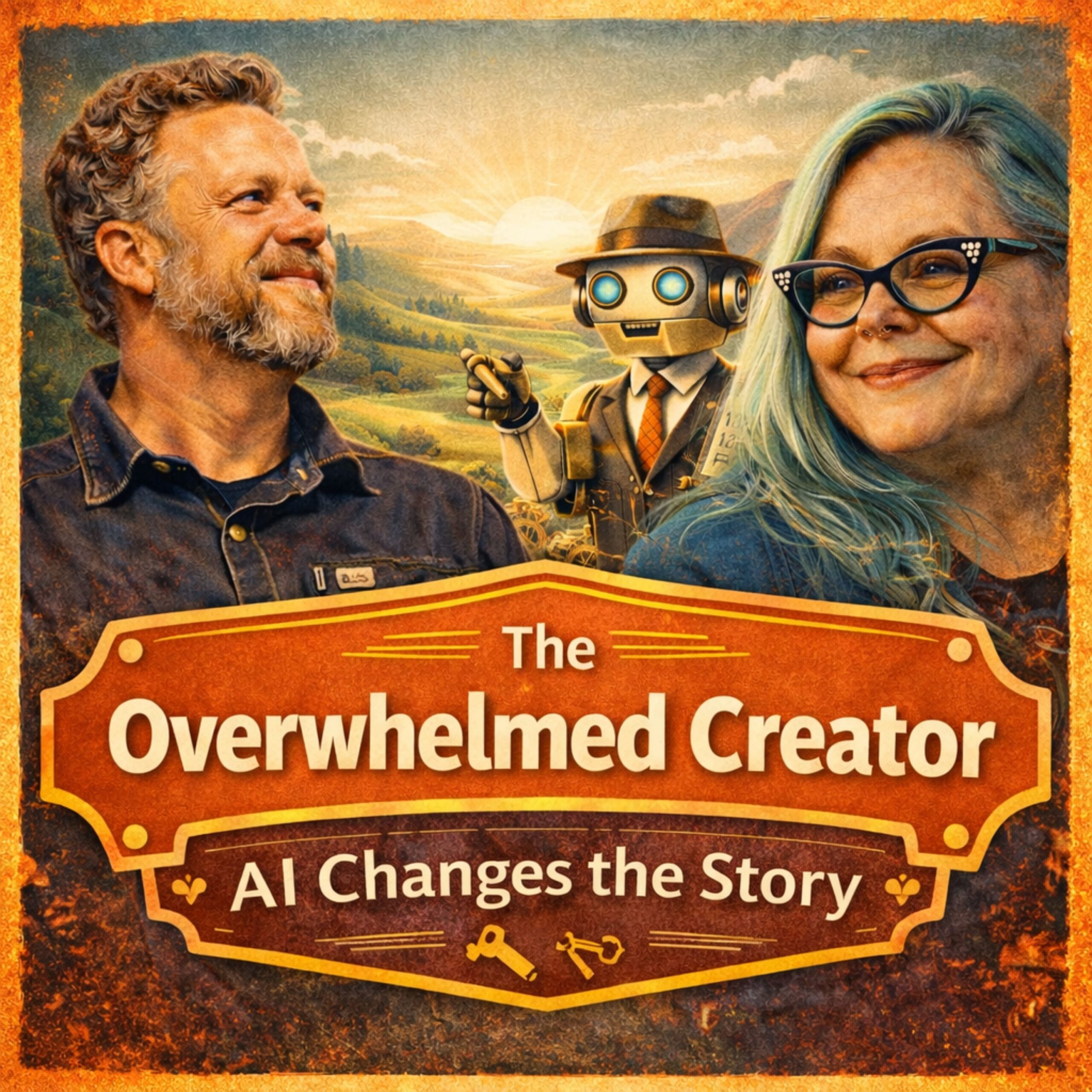
[00:02:17] Speaker A: It is. We are unpacking a genuinely eye opening interview between Bradley Charbonneau, who is an author, a Speaker and a YouTuber, and Shell Honaker.
[00:02:28] Speaker B: Right. And she's also an indie author and speaker, but crucially, she is an absolute professional when it comes to practical Applications of artificial intelligence.
[00:02:38] Speaker A: She really knows her stuff. And Bradley brings this really fascinating structural lens to their conversation. He decides to frame their entire discussion around Donald Miller's famous story brand framework,
[00:02:49] Speaker B: which is such a smart way to do it.
[00:02:50] Speaker A: It's brilliant. It's a brilliant way to process this kind of dense information. So we're going to use that exact same structural len to guide our analysis.
[00:02:57] Speaker B: I love that.
[00:02:58] Speaker A: We're going to map out the overwhelmed hero of the story, the crushing problem they face, the guide who steps in with a new paradigm, the plan to escape the chaos, and then the call to action, obviously. Right. The call to action, and ultimately the severe stakes of failure versus a totally new vision of success.
[00:03:14] Speaker B: It's an incredibly effective way to translate what could be, you know, a pretty dry technical conversation about software into a highly relatable narrative.
[00:03:23] Speaker A: Definitely.
[00:03:24] Speaker B: Because in the story brand framework, the story always begins with the hero. And for the purposes of this deep dive, Shell and Bradley identify the hero as you, the listener.
[00:03:34] Speaker A: That's right. Whether you are a novelist, a YouTuber, a podcaster, or just any kind of independent publisher, you are the protagonist navigating this specific chaos.
[00:03:45] Speaker B: And every hero is immediately confronted by
[00:03:47] Speaker A: a massive problem, which is the fun part of the story.
[00:03:50] Speaker B: Right. Shell identifies a crushing reality that almost every creator listening to this will recognize instantly. She says that today's creators are, and I quote, publishers who write, not writers who publish.
[00:04:02] Speaker A: Wow. Publishers who write, not writers who publish. That distinction feels massive to me.
[00:04:06] Speaker B: It shifts the entire identity of the creator. I mean, when you are a publisher who writes, the button of doing all the things takes absolute precedence over the art itself.
[00:04:16] Speaker A: Yeah, it has to. Or the business folds.
[00:04:18] Speaker B: Exactly.
You are battling this intense, relentless left brain versus right brain conflict.
[00:04:25] Speaker A: It's a tug of war.
[00:04:26] Speaker B: You're torn daily between the creative art you actually love to make and the tedious, highly analytical business operations required to keep the lights on and actually survive in a crowded market.
[00:04:38] Speaker A: Okay, let's unpack the actual mechanics of that exhaustion for a second. Because when we talk about this problem, it's.
It's so easy to just shrug and say, well, running a business takes a lot of time.
[00:04:48] Speaker B: Right. People dismiss it.
[00:04:49] Speaker A: They do. They think it's just a calendar issue. Is it really just a simple lack of hours in the day? Or is the deeper, like, more insidious issue the mental whiplash of context switching?
[00:05:00] Speaker B: Oh, it's the whiplash.
[00:05:01] Speaker A: Like the brutal transition from being a visionary artist dreaming up the emotional arc of a character to suddenly forcing yourself to be A data driven marketer trying to shave 3 cents off a fake Facebook ad.
[00:05:13] Speaker B: Yeah, I would actually push back on the premise that it's just about a lack of time.
[00:05:16] Speaker A: You think it's mostly the mental drain?
[00:05:18] Speaker B: Absolutely. Time is a finite resource. Yes, yes, but the context switching you just described is the actual disease here. That mental whiplash depletes your cognitive resources far faster than the physical tasks themselves
[00:05:33] Speaker A: because your brain has to completely change gears.
[00:05:35] Speaker B: Right. When you force your brain to constantly jump between vulnerable creative flow states and rigid analytical administration, you aren't just losing hours on the clock.
[00:05:44] Speaker A: What are you losing?
[00:05:45] Speaker B: You are fundamentally draining your capacity to generate original ideas. You are poisoning the very well you draw from to create your arc.
[00:05:54] Speaker A: That is a terrifying way to put it, but it's so true. And the stakes of failing to solve that problem are terrifyingly high.
[00:06:00] Speaker B: Very high.
[00:06:01] Speaker A: If the creator doesn't find a way out of this trap, failure doesn't just mean your business slowly, you know, quietly closes.
[00:06:08] Speaker B: That's worse.
[00:06:10] Speaker A: Failure looks like profound, cynical burnout. It looks like the agonizing pain of having this great book or this amazing passion project that gets absolutely zero traction because no one can discover it.
[00:06:19] Speaker B: Precisely. You get trapped on this endless treadmill of someday tasks.
[00:06:23] Speaker A: Ugh. The someday list.
[00:06:25] Speaker B: We all have them. The administrative chores that sit on your calendar month after month, but never actually get done because they are just too draining.
[00:06:33] Speaker A: And the sheer desperation of that failure makes creators incredibly vulnerable. I mean, in the source material, Bradley mentions a heartbreaking story.
[00:06:42] Speaker B: Oh, the scam core story.
[00:06:43] Speaker A: Yeah. Of a creator who, out of pure frustration and just a desperate desire to find some magic bullet, fell victim to a $7,000 online course.
[00:06:54] Speaker B: $7,000?
[00:06:54] Speaker A: Seven grand. And it was barely worth a fraction of that price.
[00:06:57] Speaker B: It's tragic, but it happens all the time when people are desperate.
[00:07:01] Speaker A: So when a creator is staring down that level of burnout and desperation, they need a lifeline. They need a guide.
[00:07:08] Speaker B: Enter the guide.
[00:07:08] Speaker A: Exactly. And in this conversation, that guide is Schell Honecker. And what makes her uniquely qualified here is that she completely spans both of these seemingly incompatible worlds.
[00:07:20] Speaker B: Right. She's not just a tech person.
[00:07:22] Speaker A: She isn't just a tech bro pitching software. She's an indie author herself. She intimately knows the pain of the blank page and the existential dread of marketing a novel.
[00:07:32] Speaker B: But she also understands the back end of artificial intelligence not as novelty, but as an actual lever to solve this specific dilemma.
[00:07:40] Speaker A: Right. And she brings news of a massive paradigm shift that completely changes the rules. Rules of engagement here this isn't just
[00:07:47] Speaker B: about tweaking a social media algorithm either. She introduces the concept of agentic AI.
[00:07:53] Speaker A: Agentic AI?
[00:07:54] Speaker B: Yes, specifically pointing to recent tools like Claude Code and Claude Cowork.
[00:08:00] Speaker A: Now, this is the turning point. This is where things get wild. What does agentic AI actually mean under the hood? Like, how is this different from the AI tools everyone has been playing with for the last couple of years?
[00:08:10] Speaker B: Well, we have to look at how we've interacted with AI. Up until recently, before this shift, AI was essentially a highly advanced conversational partner.
[00:08:18] Speaker A: Like a chatbot.
[00:08:19] Speaker B: Exactly. You would type a prompt, asking it to, say, write 20 social media captions for your new book. It generates the text on your screen, but then the process stops.
[00:08:29] Speaker A: Right. Just sits there.
[00:08:30] Speaker B: It just sits there. You, the human bottleneck, have to physically highlight that text, copy it, open your social media scheduler, paste it in, dig through your hard Drive to find 20 matching images, and manually set all the calendar dates.
[00:08:44] Speaker A: So you were still doing the heav lifting of execution.
[00:08:47] Speaker B: Exactly.
AgentIC AI changes the primary verb from generate to act.
[00:08:54] Speaker A: It acts.
[00:08:55] Speaker B: It doesn't just talk to you. It takes action on your computer.
[00:08:58] Speaker A: Here's where it gets really interesting. It's like we've upgraded from having a really smart encyclopedia that can tell you the best theoretical way to organize your files to suddenly having a virtual assistant who actually logs into your computer, clicks on the files, and drags the folders around for you.
[00:09:13] Speaker B: That's a perfect way to describe it.
[00:09:14] Speaker A: But how does it actually do that? Like, is it literally taking control of the MOUs and moving it around the screen?
[00:09:19] Speaker B: In a sense, yes, though it operates much faster than a physical mouse click. With your explicit permission, an agentic AI is given access to your computer's backend or specifically authorized to interact with the APIs of your software.
[00:09:33] Speaker A: Okay, remind me. An API is an API.
[00:09:36] Speaker B: An application programming interface is essentially a secure digital bridge.
[00:09:40] Speaker A: A bridge.
[00:09:41] Speaker B: Right. A bridge that lets two distinct pieces of software talk directly to each other.
[00:09:45] Speaker A: Got it.
[00:09:46] Speaker B: So instead of you clicking buttons, the AI can reach directly across that bridge, into your Google Drive, your canva account, or your website's backend, and execute complex
[00:09:57] Speaker A: commands instantly, as if you were sitting there doing it yourself.
[00:10:00] Speaker B: Exactly as if you were doing it.
[00:10:02] Speaker A: Man, that is wild.
But a guide doesn't just hand you a terrifyingly powerful tool and walk away. Shell offers a very clear, highly structured plan to harness this without losing your mind.
[00:10:13] Speaker B: You definitely need a plan.
[00:10:15] Speaker A: Yeah, and the first phase of her plan is all about organizing the existing chaos and fiercely protecting the creator's unique human voice.
[00:10:23] Speaker B: The foundational step of her approach involves using a tool called airtable.
[00:10:28] Speaker A: I have heard of airtable.
[00:10:29] Speaker B: Yeah. For those unfamiliar, think of airtable as a supercharged, highly interconnected relational database. It looks like a spreadsheet, but it acts like a full software application. Shell advocates using it as a centralized hub to track absolutely everything in your creator life.
[00:10:44] Speaker A: Everything like what?
[00:10:46] Speaker B: She uses it to track character arcs for her novels, specific scenes, email contacts, marketing assets, and complex social media campaigns, all in one unified ecosystem.
[00:10:57] Speaker A: Because it's interconnected. Right. So it's not just a bunch of isolated static lists.
[00:11:00] Speaker B: Exactly. If she updates a character's description in one place, it can dynamically link to the marketing materials for that specific book.
[00:11:08] Speaker A: That is so smart. But we have to address the elephant in the room here.
[00:11:12] Speaker B: Let's hear it.
[00:11:13] Speaker A: When we talk about AI generating marketing content, blurbs and newsletters, there is a massive fear of AI isms.
[00:11:21] Speaker B: Oh, the aisms.
[00:11:22] Speaker A: Yes, you know what I mean.
[00:11:24] Speaker B: The robotic, fragmented, overly enthusiastic tones that
[00:11:28] Speaker A: AI often defaults to with all the rocket emojis.
[00:11:31] Speaker B: Yes, we've all seen them online. Delve into this tapestry of Are you
[00:11:34] Speaker A: ready to unlock your potential?
[00:11:35] Speaker B: Exactly. What? Once you recognize the predictable rhythm devices, the weird emojis, and the repetitive rhetorical questions AI uses, you can't unsee them. It just screams machine generated.
[00:11:47] Speaker A: It totally does. And this is where I really have to push back on the whole concept. If every single creator out there starts unleashing these agentic bots to write their newsletters and their social posts, doesn't the Internet just become bots? Talking to bots?
[00:12:00] Speaker B: That's a valid concern.
[00:12:01] Speaker A: Doesn't all creator content risk blending into this monotonous sea of generic robot speak?
How does Shell's plan truly prevent us from losing our creative soul in the process?
[00:12:12] Speaker B: It is honestly the most vital question a creator can ask right now.
But we have to separate the intent of the writing from the output.
[00:12:19] Speaker A: Okay, how so?
[00:12:20] Speaker B: Shell draws a very hard, uncompromising line here. She explicitly states, I do not use AI to write my books.
[00:12:27] Speaker A: Oh, okay. So the art is safe.
[00:12:28] Speaker B: The art itself remains fiercely exclusively human.
She uses the AI strictly for business and marketing operations.
[00:12:35] Speaker A: Gotcha.
[00:12:36] Speaker B: And to avoid that robotic sea of sameness you mentioned, she doesn't just ask the AI to write a post. She trains the AI using her own strict brand guides, style guides, and past copywriting examples.
[00:12:46] Speaker A: Oh, so she's feeding it her previous successful human writing first.
[00:12:51] Speaker B: Well, more accurately, she's restricting its Parameters restricting it. Right. You aren't asking the AI to invent a Persona out of thin air.
You are forcing it to operate strictly within the boundaries of your established voice.
[00:13:04] Speaker A: You are cloning your administrative voice, not your artistic one.
[00:13:08] Speaker B: Yes. The goal isn't to outsource your creative soul. The goal is to outsource the administration so your creative soul finally has room to breathe.
[00:13:17] Speaker A: That distinction is profound because, I mean, I think there is this pervasive hustle culture guilt among creators that says you have to bleed for every single aspect of your business.
[00:13:27] Speaker B: Oh, for sure. If you aren't suffering, you aren't working hard enough.
[00:13:29] Speaker A: Exactly. If you didn't suffer over the mailchimp newsletter formatting, it somehow cheapens the novel you wrote. Shell is basically giving creators permission to let go of that guilt. The promotional email about the book isn't the book.
[00:13:42] Speaker B: That guilt is exactly what keeps creators trapped in the restaurant kitchen analogy you used earlier.
[00:13:47] Speaker A: Yep.
[00:13:47] Speaker B: Once you let go of that guilt and lock in that administrative voice, Shell's plan moves heavily into contextual repurposing.
[00:13:56] Speaker A: Contextual repurposing. Break that down.
[00:13:58] Speaker B: She talks about taking just one single human written blog post or one chapter of your book and having the AI automatically generate an entire week's worth of platform tailored social content.
[00:14:10] Speaker A: Oh, platform tailored. So it's not just copy pasting the same thing.
[00:14:14] Speaker B: Right. It knows that an Instagram post needs to be highly visual and punchy, whereas a post on threads needs to be descriptive and text heavy. It tailors the message to the medium automatically.
[00:14:25] Speaker A: That is a huge time saver. She even mentioned using tools like freepik to generate bulk video content incredibly cheaply. Right? Yeah.
[00:14:33] Speaker B: She was generating 30 videos at a time.
[00:14:34] Speaker A: 30 videos. And her bill for heavy intensive use was just $22 for the month.
[00:14:40] Speaker B: It's unbelievable.
[00:14:41] Speaker A: But having a conceptual hub and a cloned administrative voice is really only half the battle. The second part of her plan is where we get into the actual execution, the fun stuff. And this brings us back to that staggering weekend story I mentioned at the very beginning of the show.
[00:14:55] Speaker B: The execution of the Someday list.
[00:14:57] Speaker A: The Someday List. Every creator listening has one.
[00:15:00] Speaker B: We all do. It's the list of deeply important but non urgent tasks that you promise yourself you'll get to someday. Which we all inherently know means never.
[00:15:11] Speaker A: Never. Exactly.
[00:15:12] Speaker B: Well, Shell decided to finally tackle her massive untouched backlog over a single weekend. And she didn't just run one automated task. She ran three agentic bots in parallel on her computer. Simultaneously.
[00:15:25] Speaker A: Break down exactly what those three bots were doing, because the sheer scale of this is hard to wrap your head around.
[00:15:31] Speaker B: Okay, task number one.
She directed the AI to go into her desktop and organize, rename, and tag 13,000 scattered photos.
[00:15:40] Speaker A: Wait, wait, 13,000? Not 1300.
[00:15:42] Speaker B: 13,000.
[00:15:43] Speaker A: That's absurd. How does it even know what to name them?
[00:15:46] Speaker B: Well, for the AI to do this, it doesn't just read the existing messy file names. It uses computer vision to analyze the actual pixels of the image.
[00:15:54] Speaker A: Oh, it looks at the picture.
[00:15:55] Speaker B: Yes. It identifies what the photo contains and then actively rewrites the file name to something optimized for keyword strategy.
[00:16:02] Speaker A: Like what?
[00:16:03] Speaker B: Like changing a random string of numbers. Like image 1234 to authorkeyboard jpeg.
[00:16:09] Speaker A: That is incredible.
[00:16:10] Speaker B: It sorted them into folders, removed duplicates, and added metadata.
[00:16:14] Speaker A: Okay, so While bot number one is chewing through 13,000 photos, what is bot number two doing?
[00:16:20] Speaker B: Bot number two was securely connected to the back end of her website via API. Her website hosts over 1,300 individual articles.
[00:16:29] Speaker A: 1300 articles?
[00:16:31] Speaker B: Yeah. She had the AI systematically open every single article, read the text, and optimize the technical SEO.
[00:16:38] Speaker A: Just going through one by one, one by one.
[00:16:41] Speaker B: It identified images that were missing alt tags, which are crucial text descriptions for visually impaired users, and search engine indexing, and it wrote them on the fly. Wow. It even corrected responsive HTML sizing issues where visual elements were just a few pixels off from mobile viewing.
[00:16:57] Speaker A: And the third bot, what was bot3 doing?
[00:16:59] Speaker B: Bot3 was directly attacking a financial drainage. She was paying $200 a month for what she called glacial storage.
Basically an incredibly slow, expensive server to hold old images. The AI spent 24 straight hours migrating all of that data out of the expensive system and securely moving it into a much cheaper alternative.
[00:17:18] Speaker A: Unbelievable. So, 13,000 photos organized via computer vision, 1300 articles optimized for technical SEO via API, and a massive server migration that instantly saved her $200 every single month.
[00:17:33] Speaker B: Yep. All at once.
[00:17:34] Speaker A: How long would that have taken?
[00:17:35] Speaker B: A human shell estimated that work would have taken her four straight months of grueling manual labor. The bots finished it in two days,
[00:17:43] Speaker A: and the results were tangible immediately. I mean, because of that massive SEO cleanup, across 1300 articles, she reported a 26% boost in overall website traffic just a few days. That is a massive needle mover for an independent business. And it was accomplished while she was literally off living her life, having a weekend. Yeah, but. And this is a massive but that we really have to address here. Handing over the literal keys to your computer, your website backend, and your File system to an invisible bot feels absolutely terrifying.
[00:18:14] Speaker B: Oh, it's very scary.
[00:18:15] Speaker A: What if it misinterprets a command and just deletes your entire hard drive? What if it accesses your banking details?
Shell's plan has to include security guardrails.
[00:18:26] Speaker B: The security guard rails are non negotiable, and Shell is uncompromising on this front. Her cardinal rule for agentic AI is this.
Treat it exactly like you would a brand new, unproven, highly enthusiastic intern.
[00:18:40] Speaker A: Right.
[00:18:41] Speaker B: I love that you always, always keep a human in the loop.
[00:18:45] Speaker A: Right. Like the example she gave with the $200 a month subscription she wanted to cancel.
[00:18:49] Speaker B: Yes, that's the perfect example.
[00:18:50] Speaker A: The BO flawlessly migrated all the data to the new server, and then it actually stopped and prompted her asking, do you want me to log in and cancel the subscription for you? And Shell said no, she flat out refused.
[00:19:01] Speaker B: She refuses to let the AI touch money, cancel financial subscriptions, or independently handle sensitive confidential data.
[00:19:09] Speaker A: So the intern can prep the paperwork, but you have to sign it.
[00:19:12] Speaker B: Exactly. The agent is incredibly capable, but it has to earn trust incrementally.
And even when that trust is established, the human retains the ultimate final authority on any critical or destructive action.
The AI prepares the work. The human approves it.
[00:19:29] Speaker A: So what does this all mean for our broader digital safety? In the interview, Bradley compared this specific cultural moment to the early days of the Internet.
[00:19:38] Speaker B: Ah, yeah, the 1995 comparison.
[00:19:40] Speaker A: Right. When people were absolutely terrified to type their credit card number into a web browser. Are we standing on that exact same precipice right now with handing over desktop control to an AI?
[00:19:49] Speaker B: It's a remarkably accurate historical parallel. Think back 30 years ago. Typing your credit card into a browser felt like a reckless, incredibly dangerous leap of faith.
[00:19:58] Speaker A: You just didn't do it right.
[00:20:00] Speaker B: But today, you do it without a second thought to order a coffee. Why? Because the infrastructure, the encryption standards, and the security guard rails matured.
[00:20:08] Speaker A: We got used to it.
[00:20:09] Speaker B: We did. And we are currently in the 1995 era of agentic AI. The potential is vast and undeniable, but the caution is entirely justified.
[00:20:18] Speaker A: So you shouldn't just bury your head in the sand.
[00:20:20] Speaker B: No, the key isn't to avoid the technology out of fear, because then you just fall behind.
The key is to adopt it with strict, deliberate boundaries, just as Shell does with her new intern philosophy.
[00:20:33] Speaker A: Okay, so if someone listening is feeling that overwhelming burnout and they are ready to finally hand off their own administrative nightmares to a digital intern, what is the actual practical path forward? How do they Start implementing this safely.
[00:20:47] Speaker B: SHEOL provides a very direct path for this. She is hosting an AI for your author business two day virtual summit on April 21st and 22nd.
[00:20:56] Speaker A: Oh, awesome.
[00:20:57] Speaker B: Yeah. This is designed specifically to move creators from the theoretical concepts we are discussing today into actual hands on implementation.
[00:21:05] Speaker A: And the structure of that summit is really accessible. Day one, which covers the entire conceptual framework, the setting up your airtable hub, voice training to avoid those aisms, and the contextual content repurposing. That's entirely free, right?
[00:21:18] Speaker B: Day one is completely free. And day two is the paid intensive deep dive where she literally opens her screen and shows you over her shoulder how to Securely connect the APIs, how to run tools like Claude Coworks safely, and how to set up your own digital operations center without breaking your computer.
[00:21:36] Speaker A: Without accidentally deleting everything.
[00:21:37] Speaker B: Exactly.
[00:21:38] Speaker A: Yeah.
[00:21:38] Speaker B: If you are an overwhelmed creator, the logical next step is to explore those resources. The specific URL mentioned in their interview is repossible.comsummit.
[00:21:49] Speaker A: that's repossible.com, summit.
[00:21:51] Speaker B: So if a creator takes that step and they actually follow this plan to securely clone their admin voice and execute their backlog, we finally arrive at a totally new vision of success.
[00:22:02] Speaker A: We do.
[00:22:03] Speaker B: We know that the stakes of failure were severe burnout and creative obscurity.
What does Shell's vision of success actually look like in practice?
[00:22:10] Speaker A: Shell defines success in this new paradigm not just as catching up on your to do list, but as fundamentally getting ahead of the market.
[00:22:17] Speaker B: Getting ahead? Yeah. It's the profound physical relief of waking up, opening your analytics dashboard and seeing that your agentic AI noticed a Facebook ad wasn't performing well and it dynamically optimized the text and swapped out the creative image overnight while you were sleeping.
[00:22:34] Speaker A: That sounds incredible. It's that 26% boost in website traffic because the technical SEO that you were literally never going to get around to doing yourself is finally handled perfectly.
[00:22:45] Speaker B: Exactly. But it's so much more than just the metric data.
[00:22:48] Speaker A: Right?
[00:22:49] Speaker B: Bradley pointed out in the interview that success is fundamentally a feeling. It's the physical lightness in your chest when you look at your someday list and realize it is completely empty.
[00:23:00] Speaker A: Wow. An empty someday list.
[00:23:02] Speaker B: Ultimately, Shell distills her entire philosophy into one perfect, memorable phrase. She says, let the bots do the boring so you can do the brilliant.
[00:23:11] Speaker A: Let the bots do the boring so you can do the brilliant. I love that.
[00:23:14] Speaker B: That's perfect.
[00:23:15] Speaker A: It sounds like the ultimate success is finally getting to fire yourself from all the tedious middle management jobs. You absolutely Hate so you can go back to being the visionary artist you originally set out to be.
[00:23:25] Speaker B: That's exactly what it is.
[00:23:26] Speaker A: You get to permanently close the stressful spreadsheet and open the blank page, knowing the business engine is just humming along perfectly in the background.
[00:23:34] Speaker B: It's a completely empowering shift in identity. You transition from being a frazzled, exhausted creator wearing 12 different hats to being an empowered visionary managing a highly efficient, tireless team of digital interns.
[00:23:49] Speaker A: Yeah.
[00:23:50] Speaker B: The analytical left brain is fully supported by the AI, which frees the creative right brain to completely thrive and explore.
[00:23:58] Speaker A: What an incredible journey we just went on.
[00:24:00] Speaker B: We covered a lot of ground.
[00:24:01] Speaker A: We really did. We mapped out the overwhelmed modern creator facing the crushing burden of doing it all. We explored the massive paradigm shift of agentic AI tools that don't just talk, but actually click, migrate, and execute.
[00:24:14] Speaker B: We walk through the plan to centralize data fiercely protect your unique human voice, and tackle massive technological backlogs over a single weekend.
[00:24:23] Speaker A: We looked at the crucial intern guardrails needed to stay safe. And finally, the beautiful vision of getting back to the brilliant work.
[00:24:30] Speaker B: It fundamentally changes the equation of what it means to be an independent creator today.
[00:24:35] Speaker A: It really does.
[00:24:36] Speaker B: The technical and financial barriers to running a massive, fully optimized media empire as a solo individual are dissolving right in front of us.
[00:24:45] Speaker A: But, you know, if we connect this to the bigger picture, it leaves me with one final fascinating thing to think about with that. Well, if agentic AI eventually becomes so flawless that it completely levels the playing field for every single creator out there.
[00:24:58] Speaker B: Yeah.
[00:24:59] Speaker A: If everyone suddenly has perfect technical SEO, perfectly optimized ad spend, and perfectly tailored daily social media content, will the only remaining differentiator in the market be the raw, uniquely human vulnerability of the art itself?
[00:25:15] Speaker B: Wow. I mean, when the business operations are perfected by machines, the only thing left for us to compete on is the depth of the human soul.
[00:25:25] Speaker A: Now there is something to chew on while you stare at your own someday list.
[00:25:29] Speaker B: Absolutely.
[00:25:29] Speaker A: Thank you for joining us on this deep dive. Go check out the Summit. Stay insanely serious, and we will catch you on the next one.